

Retrospective: Béla Tarr and László Krasznahorkai: Cinema and Literature in Perfect Harmony
On January 6, 2026, the world lost legendary Hungarian filmmaker Béla Tarr. Only months earlier, his longtime collaborator, the acclaimed Hungarian writer László Krasznahorkai, had received the 2025 Nobel Prize in Literature. Suddenly, the creative partnership between these two art masters once again became a focal point of global artistic discourse.
Last year, Tarr visited China as president of the International Jury for the Forward Future Section of the 15th Beijing International Film Festival (BJIFF). He also made a personal appearance at a post-screening event for his representative work, The Turin Horse, signing autographs for nearly 400 fans in attendance - a truly memorable occasion.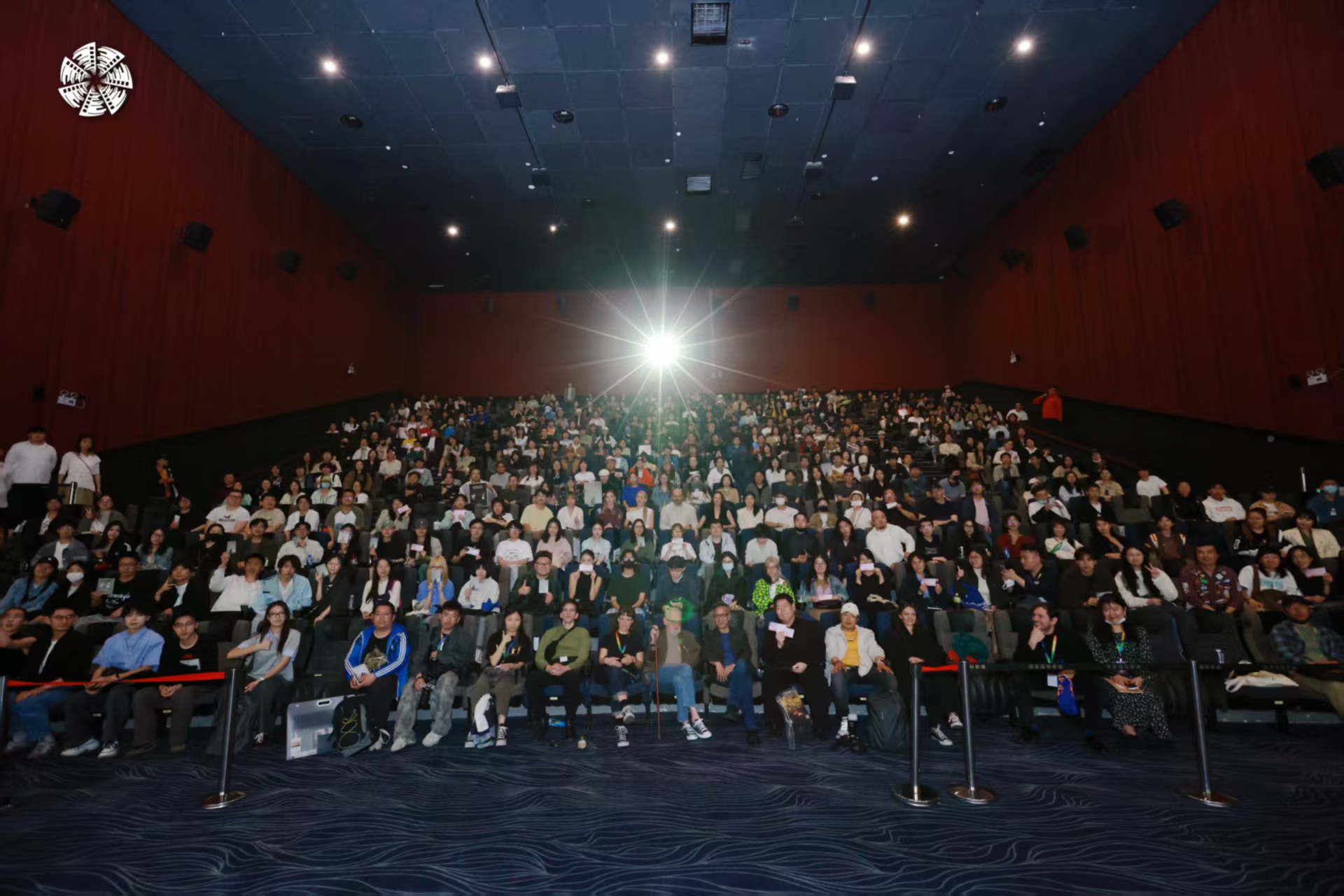
The 16th BJIFF's Retrospective section will pay tribute to this legendary duo in 2026 with a special screening of their collaborative classics, honoring Tarr's memory and celebrating the enduring dialogue between cinema and literature that defined their shared vision.
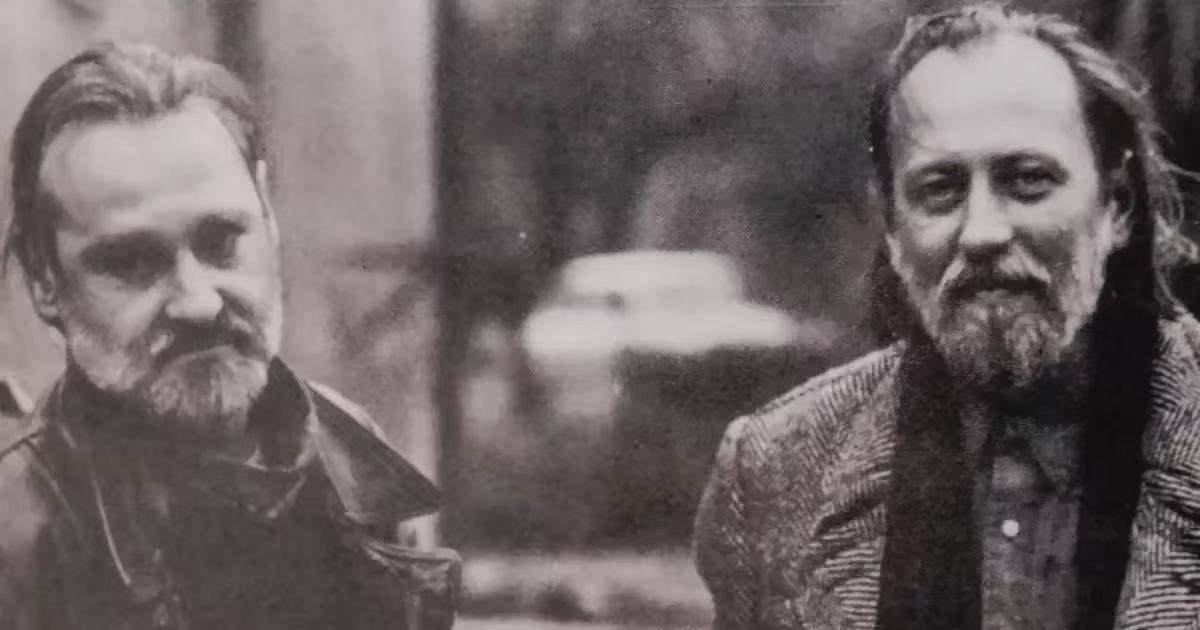
Béla Tarr and László Krasznahorkai
The two artists began their collaboration in the mid-1980s, jointly creating several timeless masterpieces in film history that have profoundly influenced the aesthetic evolution of contemporary cinema. Through this special screening, the BJIFF aims to lead audiences into the concise yet powerfully striking visual narratives of their works, offering a chance to experience the deepest resonance between film and the written word.
Tarr, born in Hungary in 1955, received an 8 mm camera from his father at the age of 14, which helped pave the way for his filmmaking career. At 16, he founded the "Dziga Vertov Group" in homage to Jean-Luc Godard and began making documentaries. After high school, he took a variety of jobs rather than proceeding directly to university. In 1979, the young Tarr released his first feature, Family Nest based on true events, a stark drama drawn from a real-life story that earned immediate domestic and international recognition.
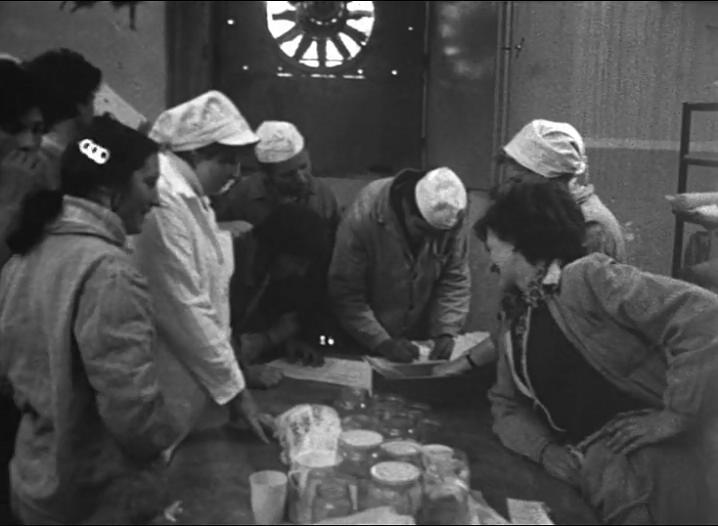
A still from Family Nest
In the decade that followed, Tarr continuously released new works. In fact, this period can be regarded as Tarr's exploratory phase. The arrival of a literary collaborator proved decisive, helping Tarr discover and refine the singular cinematic style that would become his signature.
In early 1985, a literary critic gave Tarr the manuscript of a novel by Krasznahorkai, believing that Tarr would be an ideal fit to adapt Krasznahorkai's work. At that time, Krasznahorkai was merely a fledgling writer, only a year older than Tarr. Tarr was immediately captivated and resolved to adapt the monumental Sátántangó - even though the book had not yet been published. When production conditions in Hungary made the project impossible, the two instead began collaborating on the screenplay for another film.
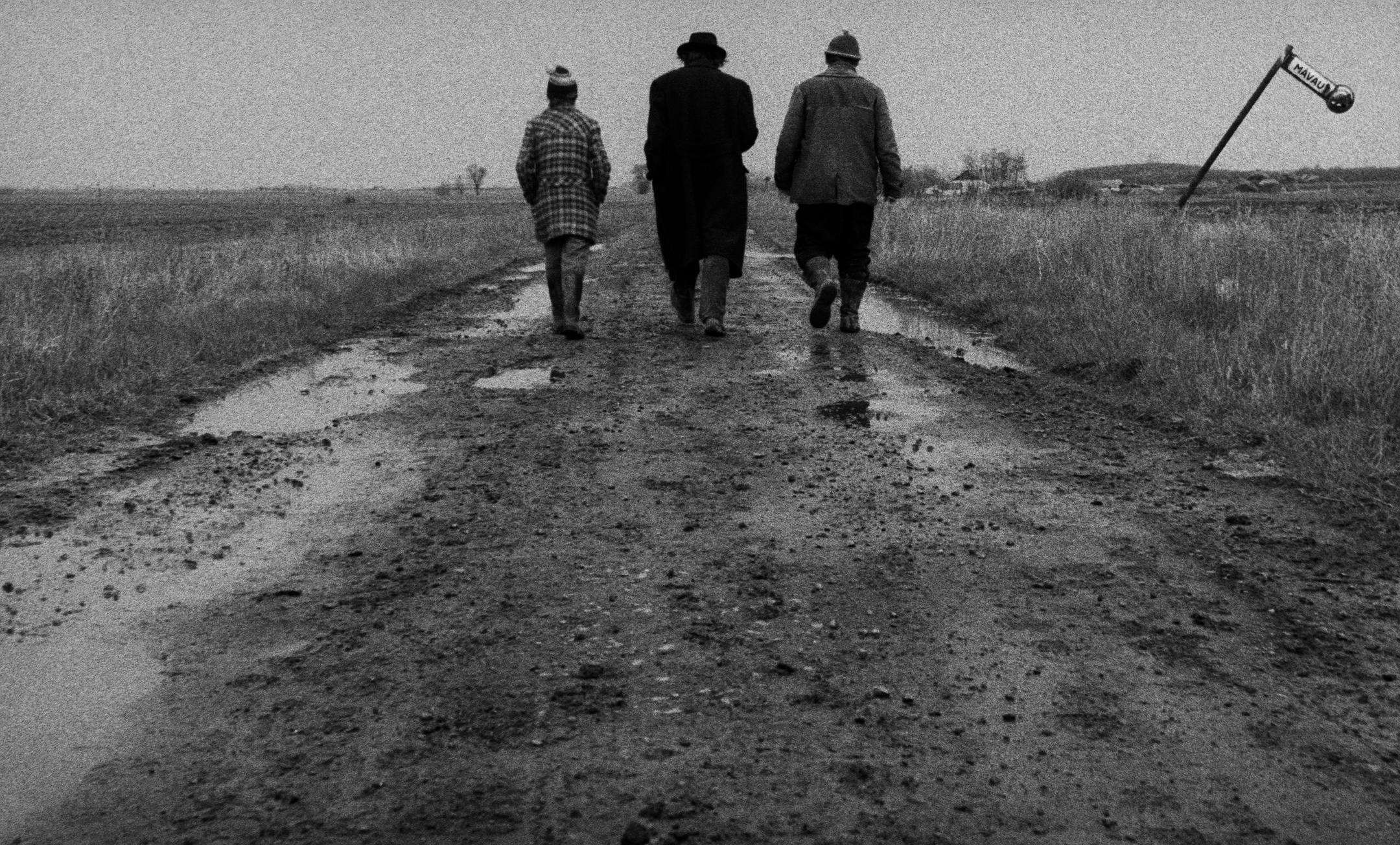
A still from Sátántangó
Their first completed joint work, Damnation (1988), marked a decisive turning point. Although Tarr had already begun experimenting with cinematic form, the film is widely regarded as the true beginning of his mature style. It is also the work where he truly began to display the makings of a master.
Damnation tells the story of an aimless man who falls in love with a married female singer. Here Tarr fully explored the dramatic potential of the long take as a means of mise-en-scène. In this film, the camera acquires an almost autonomous life. It does not merely serve the narrative and characters but moves in unexpected ways, revealing the material environment and desolate atmosphere surrounding them.
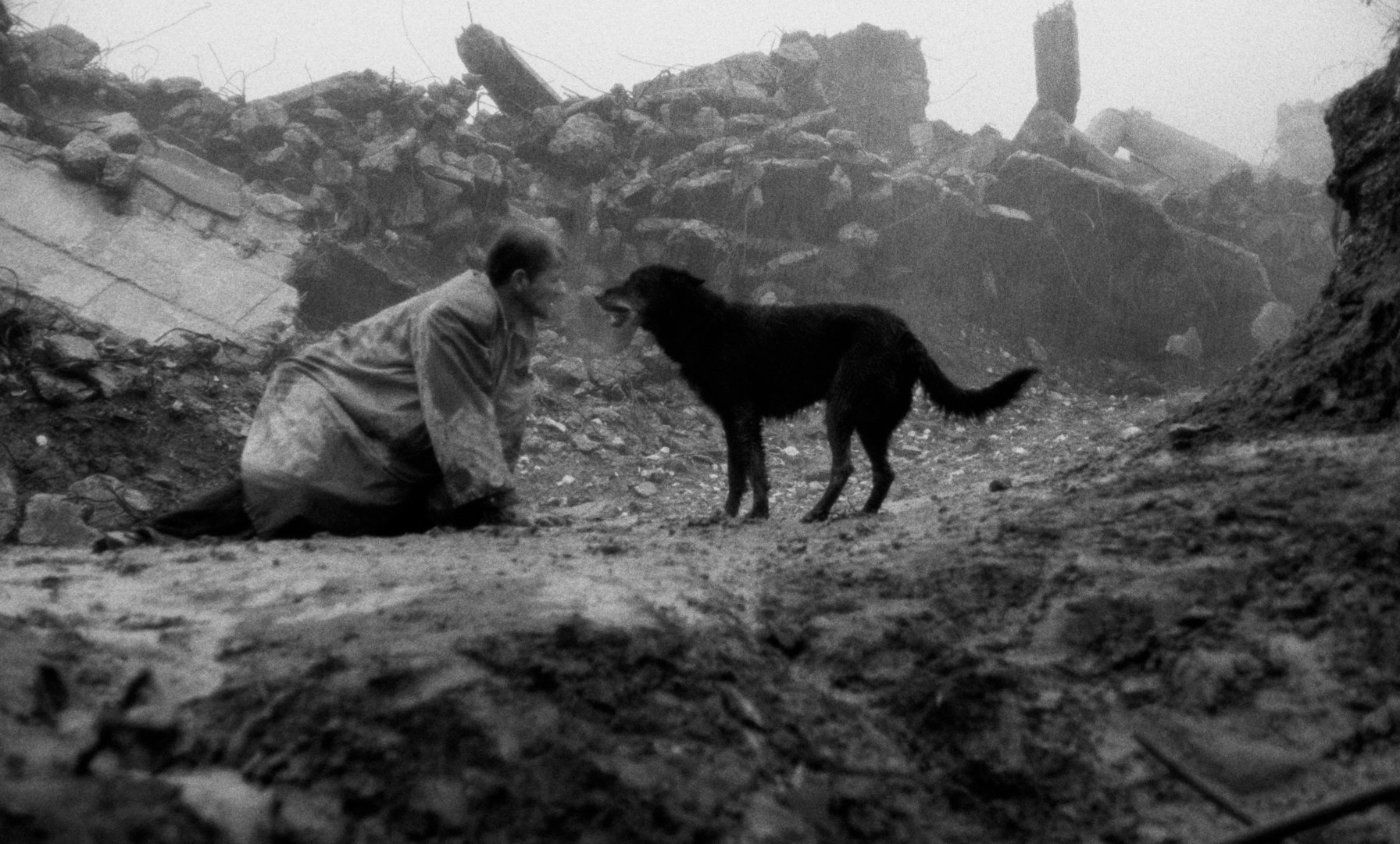
A still from Damnation
In the subsequent Sátántangó, Tarr pushed these formal and narrative experiments to their furthest extreme. Krasznahorkai's novel is structured in twelve chapters that mirror the steps of a tango - six forward, six back. This gives the book a nearly circular structure, where the words from the story's beginning reappear at its end. Widely considered one of the defining works of late-20th-century cinema, Sátántangó confirmed Tarr's place among the great film masters.
After the international acclaim of Sátántangó, Tarr returned in 2000 with another masterpiece, Werckmeister Harmonies, adapted from Krasznahorkai's novel The Melancholy of Resistance. Composed of only 39 shots, the film opens with a nearly ten-minute interior scene. These shots function like vortexes, drawing viewers with irresistible force into a strange and unsettling world.
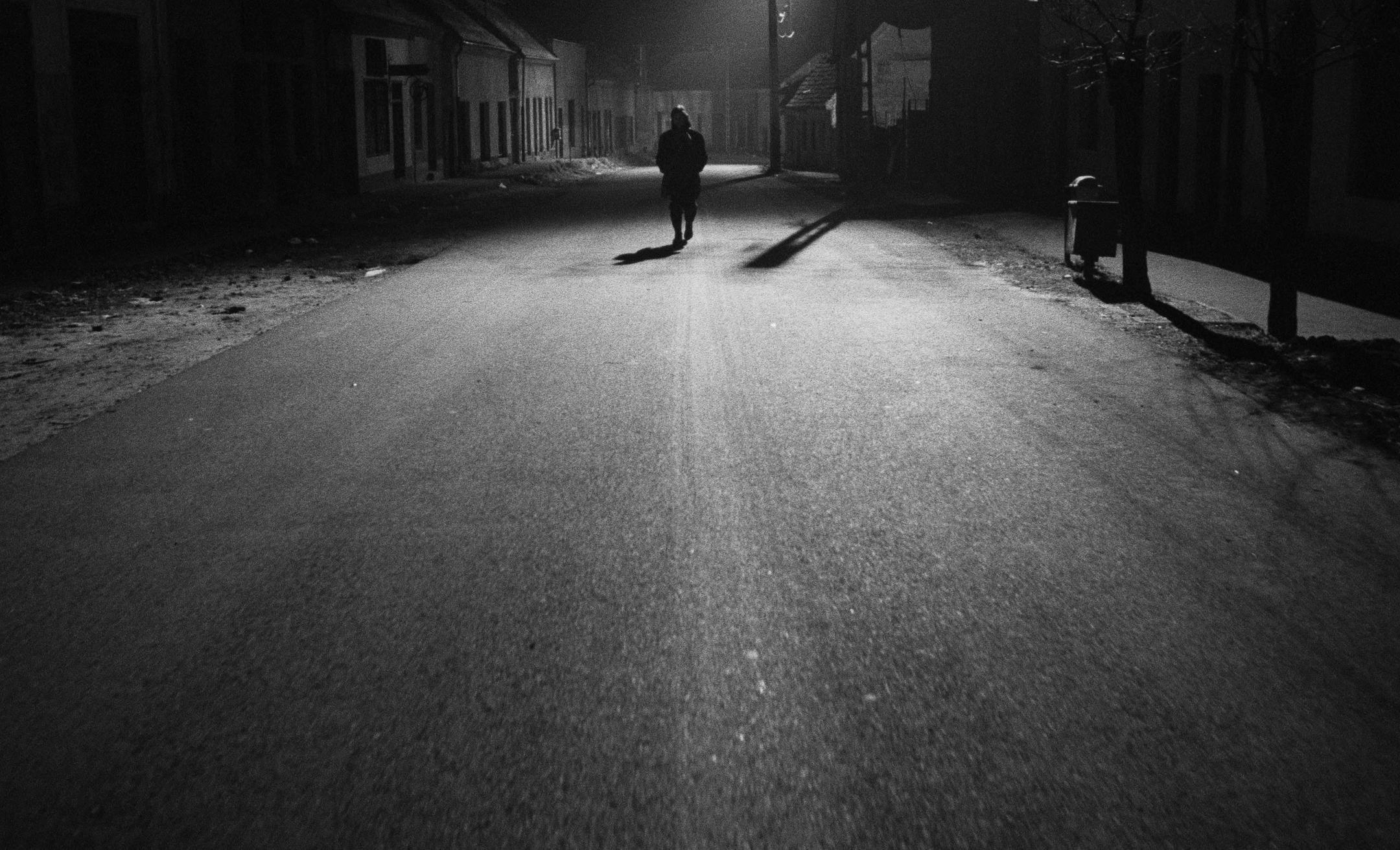
A still from Werckmeister Harmonies
In 2007, Tarr presented The Man from London. This work was adapted from a French-language story by Belgian writer Georges Simenon, but Krasznahorkai still participated in the screenplay writing. It marked Tarr's first attempt to shoot a film outside his familiar Eastern European context, featuring renowned British actress Tilda Swinton as the wife of a railway worker. Tarr used minimal dialogue in this film, instead allowing the camera to linger on the characters' faces for long periods of time. The subtle shifts in their expressions convey complex, ambiguous emotion.
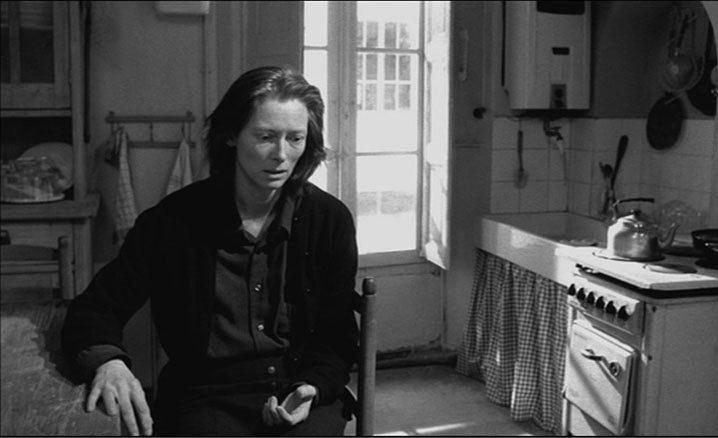
A still from The Man from London
Tarr's final feature, The Turin Horse (2011), was also his last collaboration with Krasznahorkai. The concept for the film had emerged much earlier, but preparations could only begin after Krasznahorkai had written the story. The film was inspired by the episode of Friedrich Nietzsche weeping while embracing a beaten horse. In this work, Tarr makes sparse use of explicit dialogue, instead conveying the characters and narrative purely through action and camera movement. For Tarr, death is the central theme of the film, and its apocalyptic vision of the environment stands as one of the most haunting images he has left to the world.
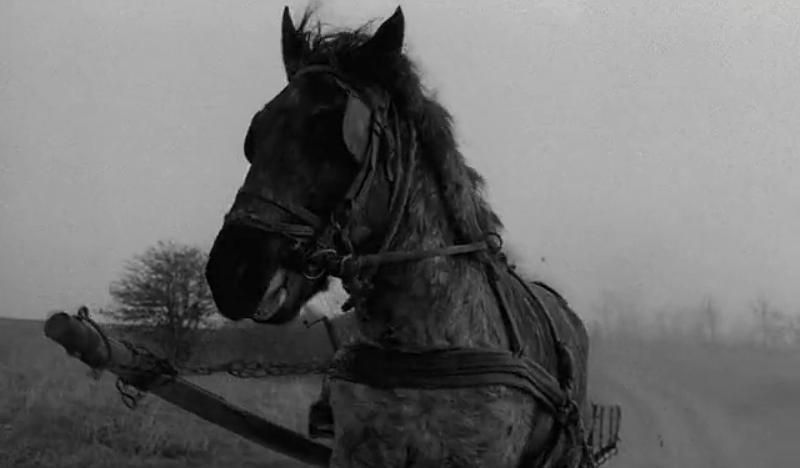
A still from The Turin Horse
Tarr and Krasznahorkai have each achieved remarkable success in their respective fields of cinema and literature, yet their friendship and sustained creative dialogue have become legendary. Krasznahorkai's densely layered prose and Tarr's radical long-take aesthetic represent the outer limits of literature and cinema. For Tarr, the filmmaker's task was to distil the very "spirit" of Krasznahorkai's writing and translate it into his own cinematic language. Their partnership remains a powerful demonstration of what can happen when the two art forms meet at their highest level.
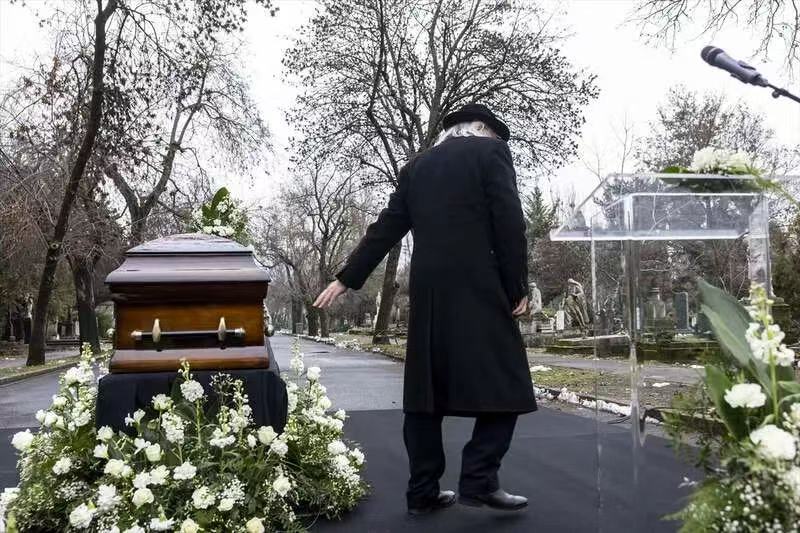
László Krasznahorkai at Béla Tarr's funeral
The 16th BJIFF is proud to present these timeless masterpieces. May the profound artistic spirit of Béla Tarr and László Krasznahorkai continue to inspire future generations of creators - and offer audiences at this year's festival a deeply moving cinematic experience.
