

Patience in Craft Authentic in Performance Behind the Final Review for BE SEEN Program at the 16th Beijing International Film Festival
In April, spring sunlight filters through the windows of Beijing, casting shifting patterns across the jury room. On April 8 and 9, this space was charged with focus and intensity. At one side of the long table sat the five jurors—Li Shaohong, Zhao Xiaoding, Wu Gang, Yu Baimei and Wei Qintao—ready to engage in a meticulous examination of the essence of performance, conducted over a series of concentrated "10-minute" sessions.
Outside in the corridor, the atmosphere was entirely different. Young actors who had advanced from the preliminary rounds waited for their turns. Some rehearsed silently against the wall, others adjusted their costumes, while some simply sat quietly, their breathing calm and measured. Each would be called forward in groups to perform designated scenes before the jury. Every performer had a single chance, limited to ten minutes.
The door opens and closes. The performances begin.
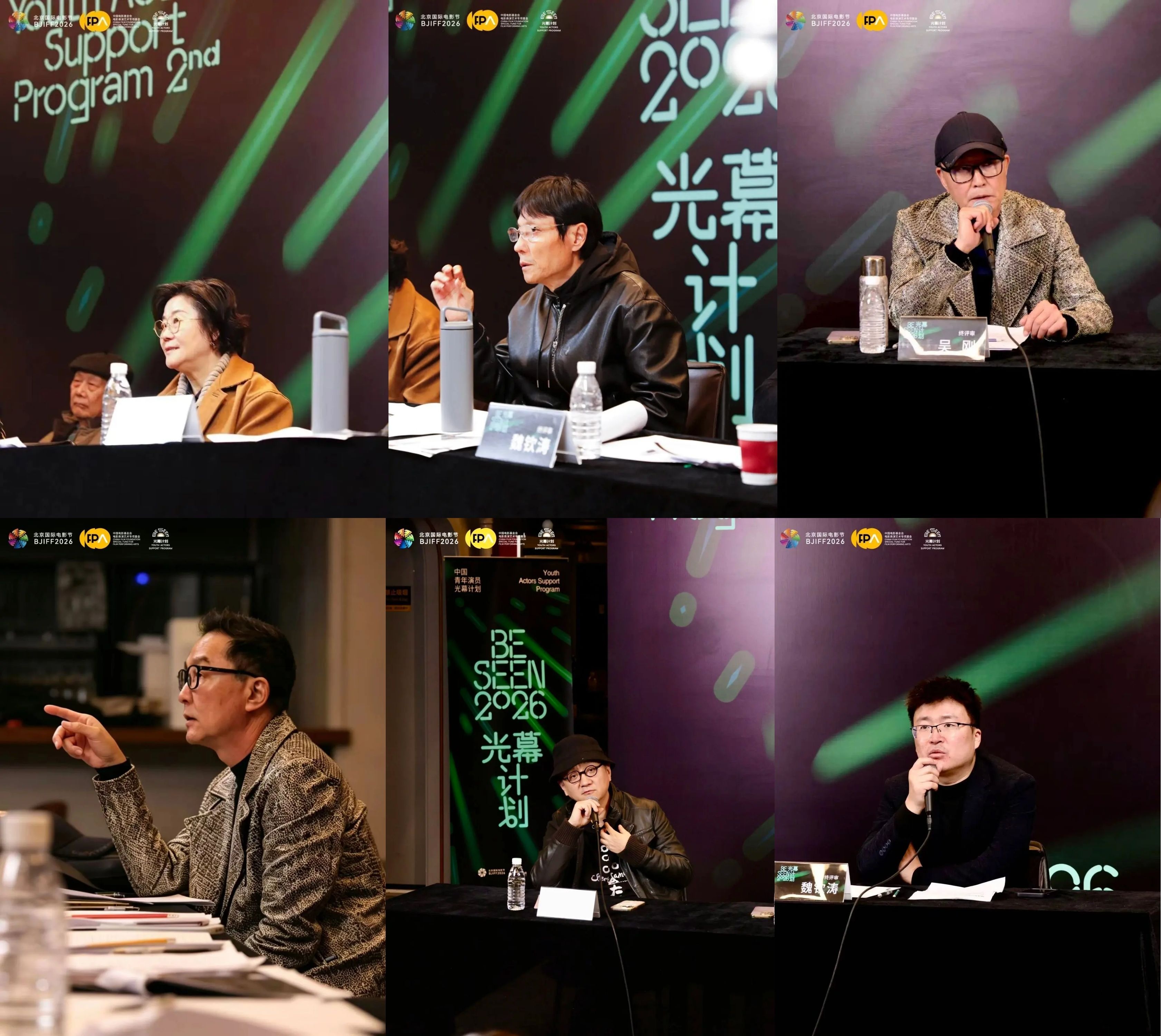
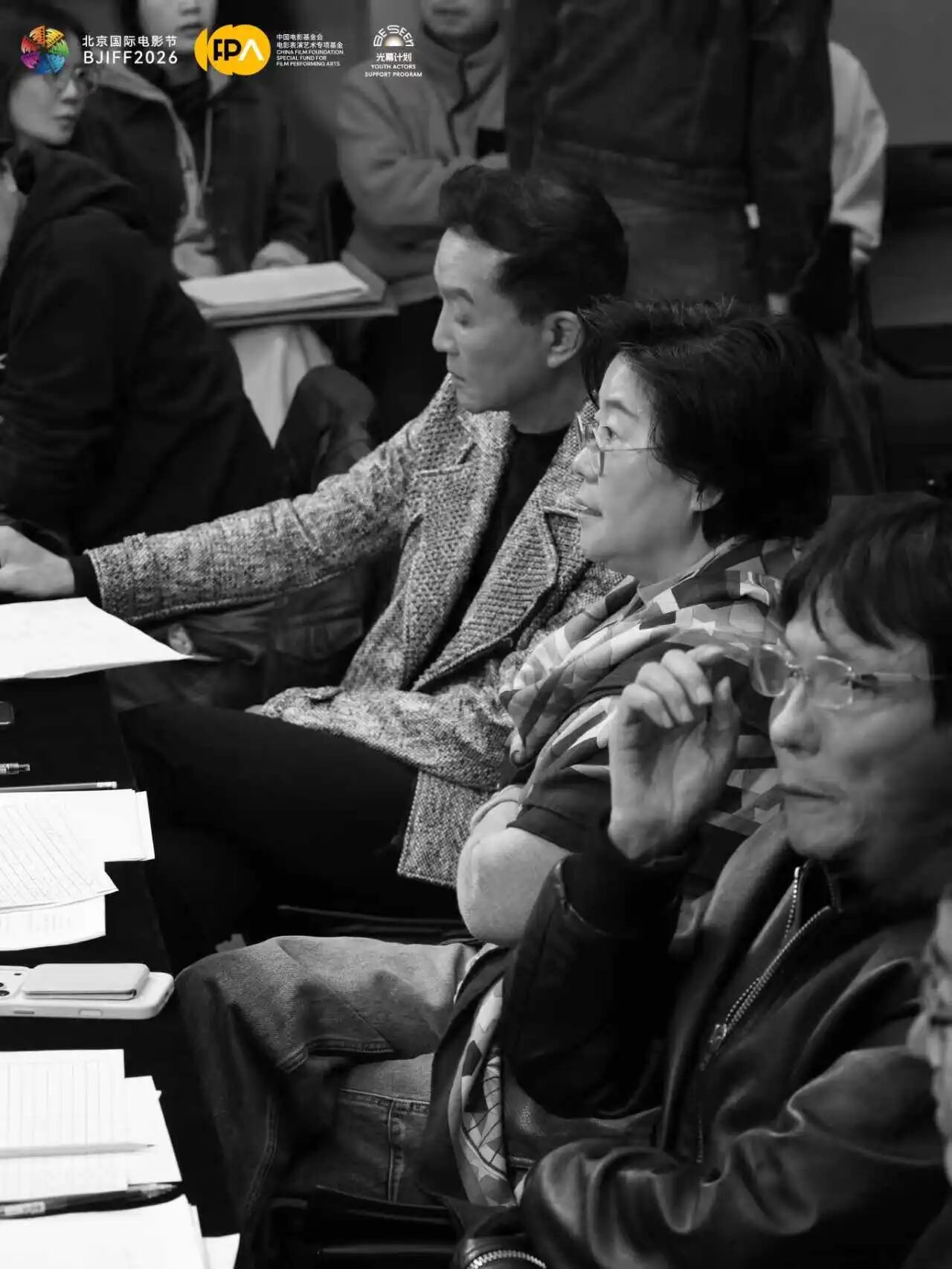
Final Jury: Li Shaohong (Chair),
Zhao Xiaoding, Wu Gang, Yu Baimei, Wei Qintao
Li Shaohong: Recovering the "Living Presence" Amid the Short Drama Wave
"You need to improve your acting. How? By what we call 'the clumsy way'—you have to ‘craft it by hand'."
—Director Li Shaohong
In the jury room, facing actors from diverse backgrounds, Director Li Shaohong's attention was drawn first to differences among the actors. "Actors trained in vertical-screen content, short dramas or historical romance productions differ in style, rhythm and approach", she noted. When presented with a résumé noting "over fifty projects filmed annually, totaling one billion views," she paused and admitted, "It's truly impressive".
She later spoke with a Beijing Film Academy graduate who had worked extensively in short dramas. The actor explained that short drama production often prioritizes emotion over process. "How do you express the emotion?" Li asked. The actor explained that he first seeks to understand the character and experience the emotions, then expresses them, leaving post-production to finalize the performance. Li was heartened: "He hasn't lost the essence of acting. He expresses emotions from the inside out, starting with the character."
Li's concern extends beyond technique. She shared with the young actors how, as a student, she was required to study Chinese and world history together, shaping a "methodology of thought" for understanding roles. Citing her encounter with Van Gogh's Sunflowers in Paris, she noted: "Without that foundation, a masterpiece is just two chrysanthemums." For her, true acting relies on "thinking" more than mere imitation.
When discussing AI, she drew a clear line: "The difference between a digital actor and a human is 'the living presence'." That spontaneous, synchronized and warm-life response is what technology cannot replicate. Cultivating this "living presence" requires a deep, sustained grounding in literature and aesthetics. The most valuable part of acting, she believes, must be "crafted by human hands, not algorithms"—a process of slowly embedding life experience and profound understanding into the character.
Zhao Xiaoding: Acting Breathes with the Lens
"Vertical-screen content has its place, but we still evaluate performance through a relatively constant aesthetic lens."
——Zhao Xiaoding
As President of the Chinese Society of Cinematographers, Zhao Xiaoding judges with the "eye of the camera". He stresses that actors must cultivate a precise spatial awareness, recognizing that the weight and amplitude of performance differ between close-ups and wide shots. To him, acting and cinematography aim for a seamless "holistic chemistry".
When discussing short dramas and vertical-screen formats, Zhao maintains a calm, professional stance. He acknowledges vertical screens as a valid medium, particularly effective for portrait-style compositions. Yet he emphasizes that the fundamental standards of acting should not waver with aspect ratio changes. On-site, he discussed with Li Shaohong how vertical framing constrains broad physical gestures, shaping the form of performance. He even speculated: "The viewing habits of short-drama audiences may eventually revert to horizontal screens."
Zhao adds a crucial dimension to the discussion of acting: it is never isolated. Performance must breathe in concert with the audiovisual environment. Drawing on decades of experience, he reminds actors that regardless of the screen, they must understand and respect the camera as a language and find the most precise and powerful position within it.
Wu Gang: A Character Meant to Burn Cannot Be Played as Ice
"Truly listen, truly observe, truly judge—these are the three pillars of acting. Never forget them."
——Wu Gang
Wu Gang's guidance often begins with a concrete performance moment. "Truly listen, truly observe, truly judge"—these are the foundational principles he repeatedly emphasizes. When a portrayal appears superficial, he pauses to instruct: "Find your own behavioral logic from your scene partner's lines." For him, the ultimate goal of technique is to allow a human being grounded in authentic relationships to exist fully on stage.
His advice is vividly practical. Demonstrating with a simple water cup, he shows how props can anchor performance. In high-pressure, fast-paced shoots, he insists that actors return to the basics: observe and feel first. He stresses the ability to find truth in fragments of dialogue and to build one's behavioral logic quickly from partners' lines, essential for surviving real-world set conditions.
Wu's stance toward experienced short-drama actors is nuanced yet firm. He acknowledges the opportunities offered by short dramas but warns: "The greatest danger is 'assembly-line' acting. Actors must create. Characters must be alive and distinct." While noting the industry's tendency toward rapid, shallow production which could lead to performances lacking depth, he places hope in an unwavering principle: regardless of format, actors should maintain aesthetic rigor and uphold high standards in script and performance. This, he believes, is the source of the industry's enduring vitality.
Yu Baimei: Traditional Craft, Especially Precious in the AI Era
"The final 10% that AI cannot reach is where human emotion truly resides."
—Yu Baimei
At the review site, Yu Baimei often frames his critiques within a broader cultural and philosophical context. When discussing technological development, he shared a metaphor: "AI has arrived like an avalanche, but an avalanche does not spread across the world; it stops at a certain point. What we can do is to ride our horse beyond that avalanche—that is a sanctuary for human emotions that technology cannot penetrate." He believes technological advancement is redrawing the competitive landscape: "As AI becomes ubiquitous, the human need for authenticity will only grow. That is what will be at a premium."
Yu Baimei often begins his evaluations with the deeper meaning of a single line of dialogue. While reviewing a clip from Dragon Inn, he paused to ask the actors, "Do you know what the code phrase 'The storms from all directions are no match for the rain on the Longmen Mountain' signifies?" Noticing their hesitation, he followed up: "And what is 'Ten-Spice Meat'?" When the actors could not identify the metaphor for "human fresh buns", Yu explained that the scene depicts two masters subtly testing one another through words, a covert duel of wit. Without a nuanced understanding of the text and subtext, the actors failed to convey the scene's delicate intentions, and the dialogue lost its intended tension.
Reflecting on classic martial arts films, he noted, "The old-fashioned, hands-on approach was once standard in our industry. It wasn't remarkable then, but in an era when AI can generate action sequences instantly, this craftsmanship becomes truly precious. Shooting action scenes requires raw, almost primal human effort, and that authenticity is invaluable in our time."
Wei Qintao: Opportunity and Vigilance in the Age of Short Drama
"Short dramas have opened the door for many actors, but the danger lies in cultivating a 'fast-food' approach to performance."
——Wei Qintao
As the industry representative on the final jury, Wei Qintao, Head of Premium Short Drama at Hongguo, provided a crucial production perspective. He framed his role as that of a "typical viewer", focusing on two questions: Is the performance genuine? Can it engage the audience without breaking immersion? This audience-centric approach brought a grounded, market-aware perspective to the jury's deliberations.
Wei's observations were pragmatic and insightful. He highlighted that short dramas have revolutionized access for young actors, lowering entry barriers and giving newcomers critical hands-on experience. Yet he also acknowledged the flip side: the rapid, results-driven pace of short dramas and audiences' demand for immediate emotional payoff can foster "fast-food" acting habits. Over time, actors may rely too heavily on external techniques, diminishing the depth and creativity of their engagement with character logic.
His presence on the jury served not only to evaluate but also to guide. It exemplifies the philosophy behind this year's BE SEEN Program, which combines classical texts with practical short drama experience: actors are encouraged to seize new opportunities while remaining vigilant against the complacency of streamlined production, preserving performance as an act of creation rather than mere output.
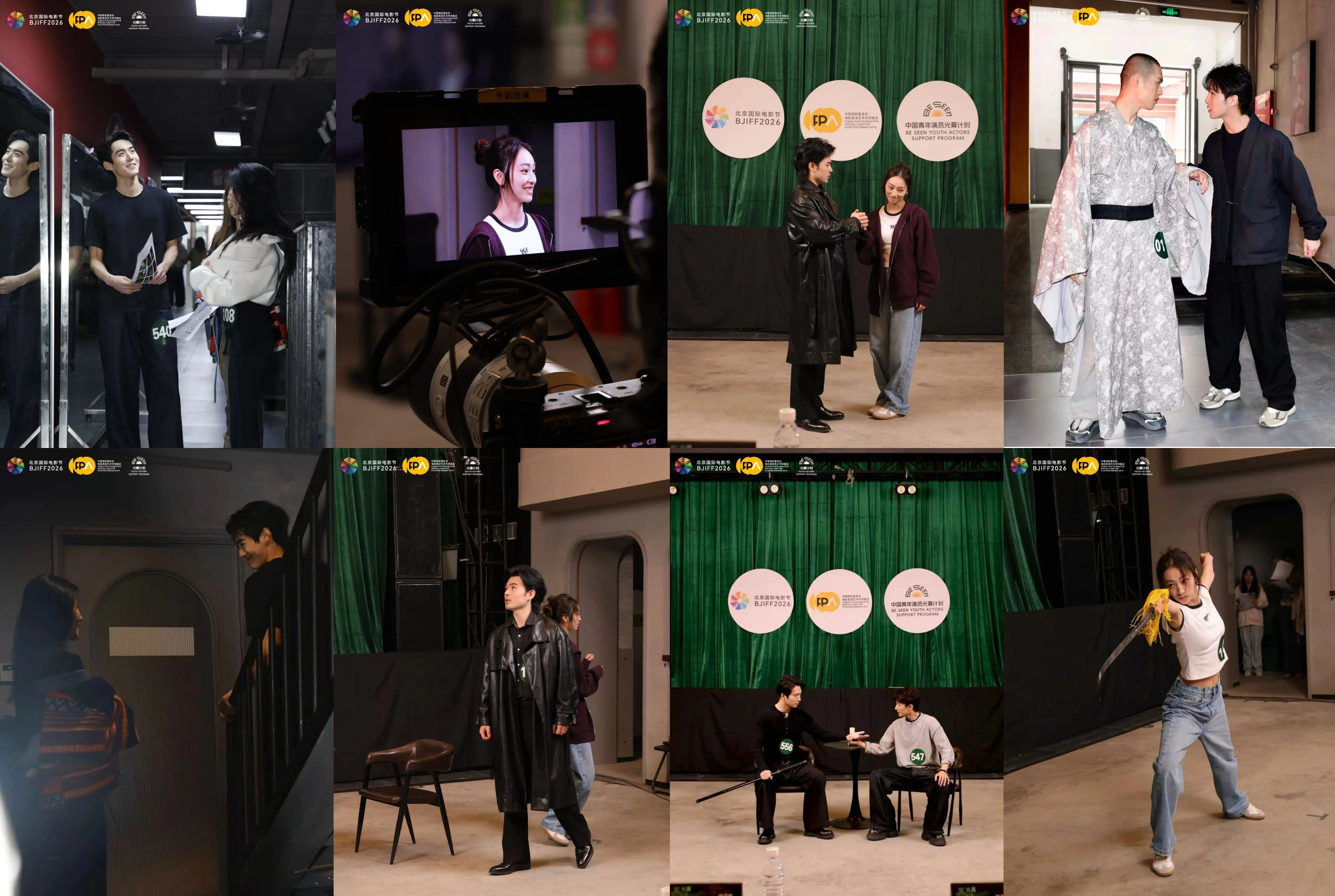
Final Jury Session
Joining the jury were Zhang Pimin, Chairman of the China Film Foundation and Honorary Chair of the BE SEEN Program, and Zhang Hua, Artistic Director and Head of the Training Camp. Together, they observed, listened and witnessed, along with the jury, the entire process of the final selection.
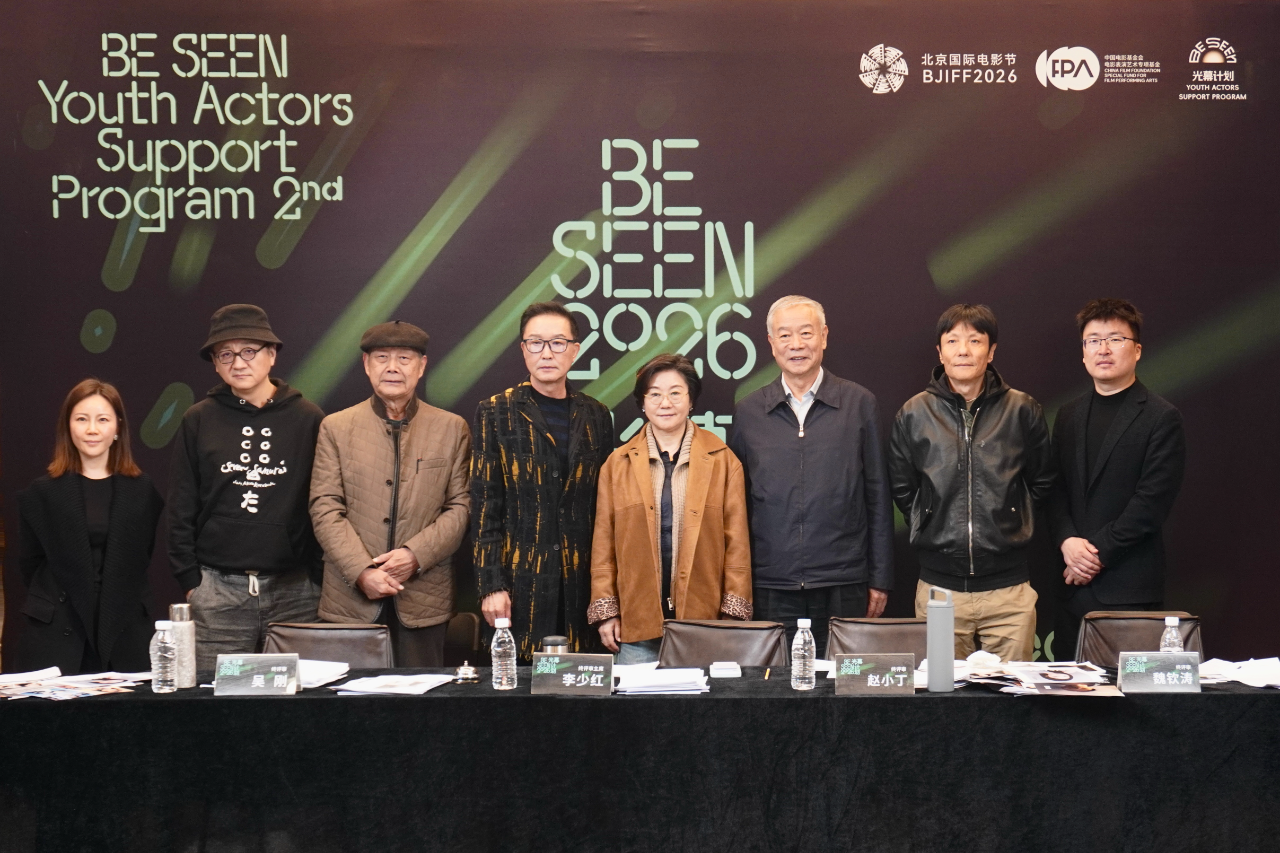
Jury with Zhang Pimin and Zhang Hua
Through rigorous questioning, demonstration and debate, the jurors undertook a deep recalibration of performance values—defining, in an era obsessed with speed, what kind of "craftsmanship" is worth slowing down for, and, in a time when technology can replicate perfection, what must be brought to life by human presence. The confirmation of this final list marks the first and clearest milestone of the journey. A new chapter of exploration has begun.
