

Boundless Immersive Section of 16th Beijing International Film Festival Hosts China s VR Film Industry Development Forum in Beijing
On April 17, China's VR Film Industry Development Forum of the 16th Beijing International Film Festival was held in Beijing under the guidance of the Film Bureau (also, the "China Film Administration") of the Publicity Department of the CPC Central Committee, hosted by the BJIFF Organizing Committee, and organized by the China Film Archive. The Boundless ∞ Immersive Section of this year's festival also officially opened on the same day.
Attendees included Huang Zhi, Director of the Technology Division of the Film Bureau of the Publicity Department of the CPC Central Committee; Gong Bo, Party Secretary and President of the China Research Institute of Film Science & Technology (China Film Technology Quality Inspection Institute under the Publicity Department of the CPC Central Committee); Lin Siwei, Deputy Director of the China Film Archive and Deputy Director of the China Film Art Research Center; and Hu Xiding, General Manager and Deputy Party Secretary of Jiangsu Film Group Co., Ltd., among others.
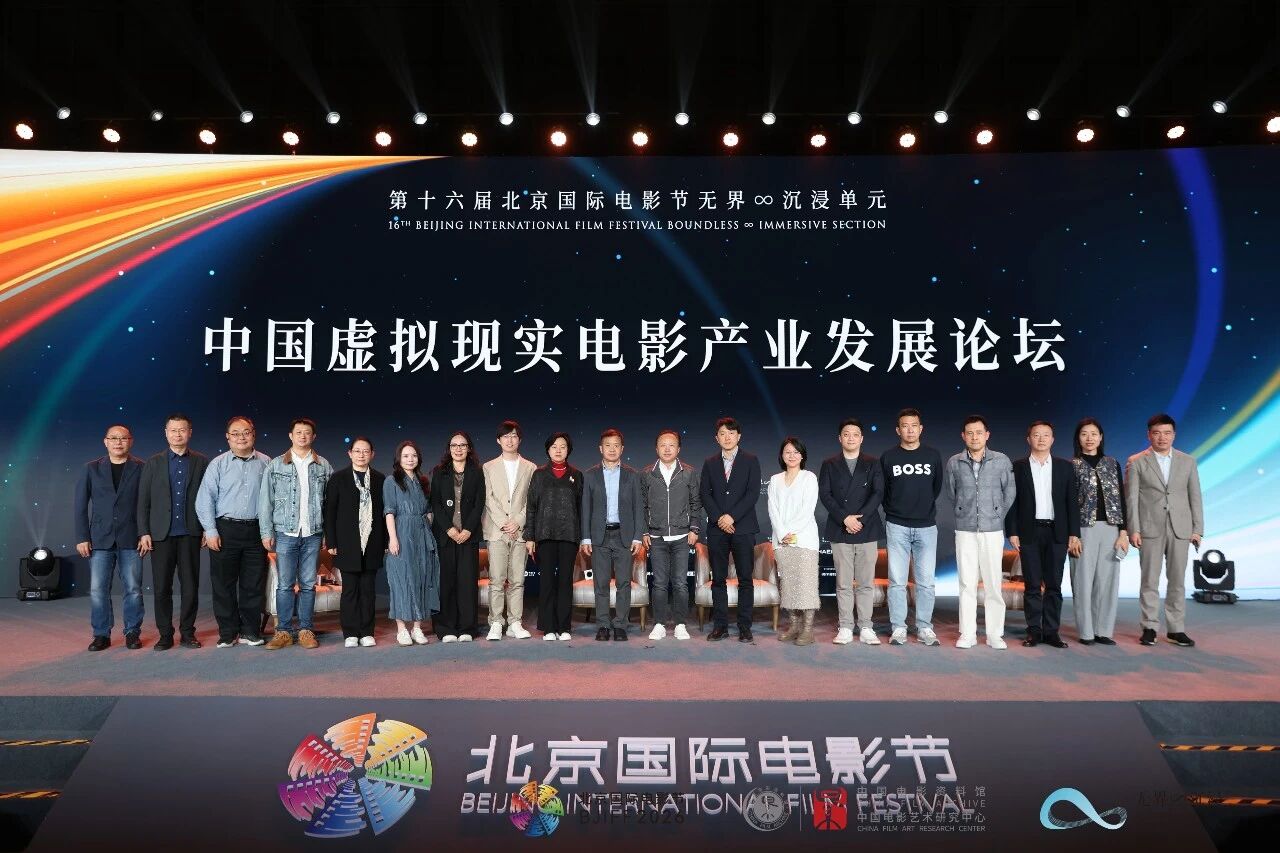
Group Photo of Forum Participants
At the forum, representatives from film authorities and all segments of the VR film industry gathered for in-depth exchange. In the keynote session, speakers shared practical insights drawn from VR film industry exploration, content creation, technology development and academic research. Two roundtable discussions brought together experts from academia and industry to examine cross-media storytelling in VR cinema and the development of a full industrial value chain, offering proposals for the sector's high-quality growth.
Over 220 VR Films Filed
Four Key Priorities Identified for Future Growth
In March 2025, China Film Administration issued the Notice on Promoting the Orderly Development of Virtual Reality Films, leveraging China's established film market system and policy framework to support the integration of VR technologies. Over the past year, under policy guidance and institutional support, the sector has seen a significant increase in production output, continuous technological innovation, gradual improvement of industry standards, and broader application of VR films across exhibition venues. As of April 17, more than 220 VR film projects have been filed nationwide, 145 filing acknowledgements have been issued, and 39 works have received China's film release license ("Dragon Seal").
"While we have made a strong start in terms of policy support and market momentum, there remains a considerable journey ahead in developing creative methodologies and industrial standards", said Huang Zhi. Looking forward, he outlined four key areas of focus: strengthening policy leadership and improving industrial support and regulatory frameworks; supporting high-quality creative production and exploring new methodologies to deliver works of both intellectual depth and technical excellence; accelerating the development of unified technical standards and advancing end-to-end standardization to ensure independent control over core technologies; and optimizing the market ecosystem by regulating screening venue operations and fostering a unified, open, competitive and orderly market environment. He emphasized that these efforts aim to "bring VR cinema closer to the public, better serve audiences, and establish it as a new growth engine and driving force for the high-quality development of China's film industry in the new era."
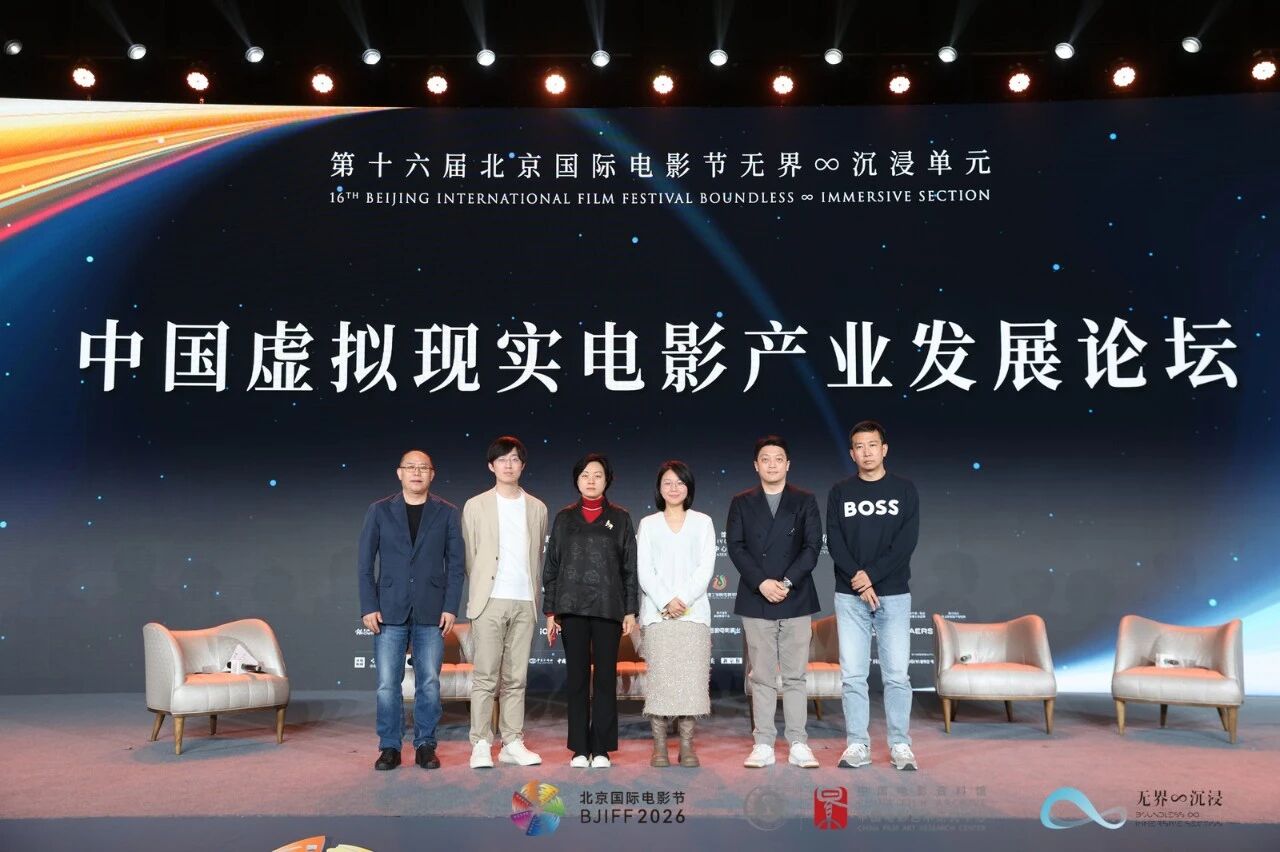
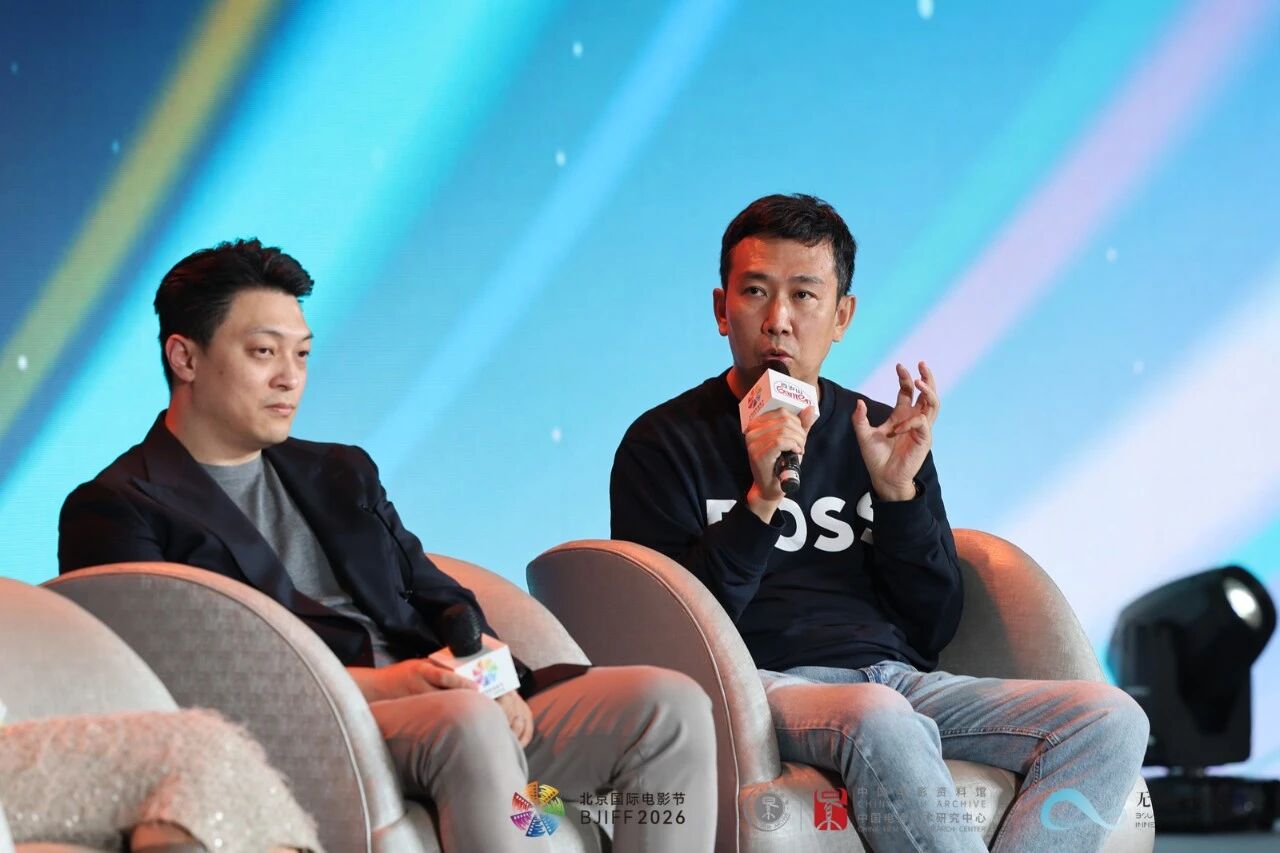
In recent years, Henan Media Group (HMG) has taken an early, proactive approach to exploring the VR film sector, achieving solid and positive results. At the forum, Wang Gang, Director of the Media Convergence R&D Department of HMG and Chairman of Elephant Yuan Digital Technology Co., Ltd., proposed that VR film development should be explored across three key dimensions: concept, creation and duration. At the conceptual level, he stressed that VR film remains, at its core, cinema, and should not be reduced to mere technological spectacle; strong emphasis must be placed on storytelling, characterization and emotional depth. At the creative level, he called for the development of a new spatial narrative grammar, shifting from linear storytelling to spatial storytelling, where light and sound serve as natural guides for audience perception. In terms of duration, he noted that due to hardware constraints of VR headsets, the optimal length for VR films is between 20 and 40 minutes, requiring highly efficient spatial narrative strategies to deliver emotional impact and narrative clarity within a limited timeframe.
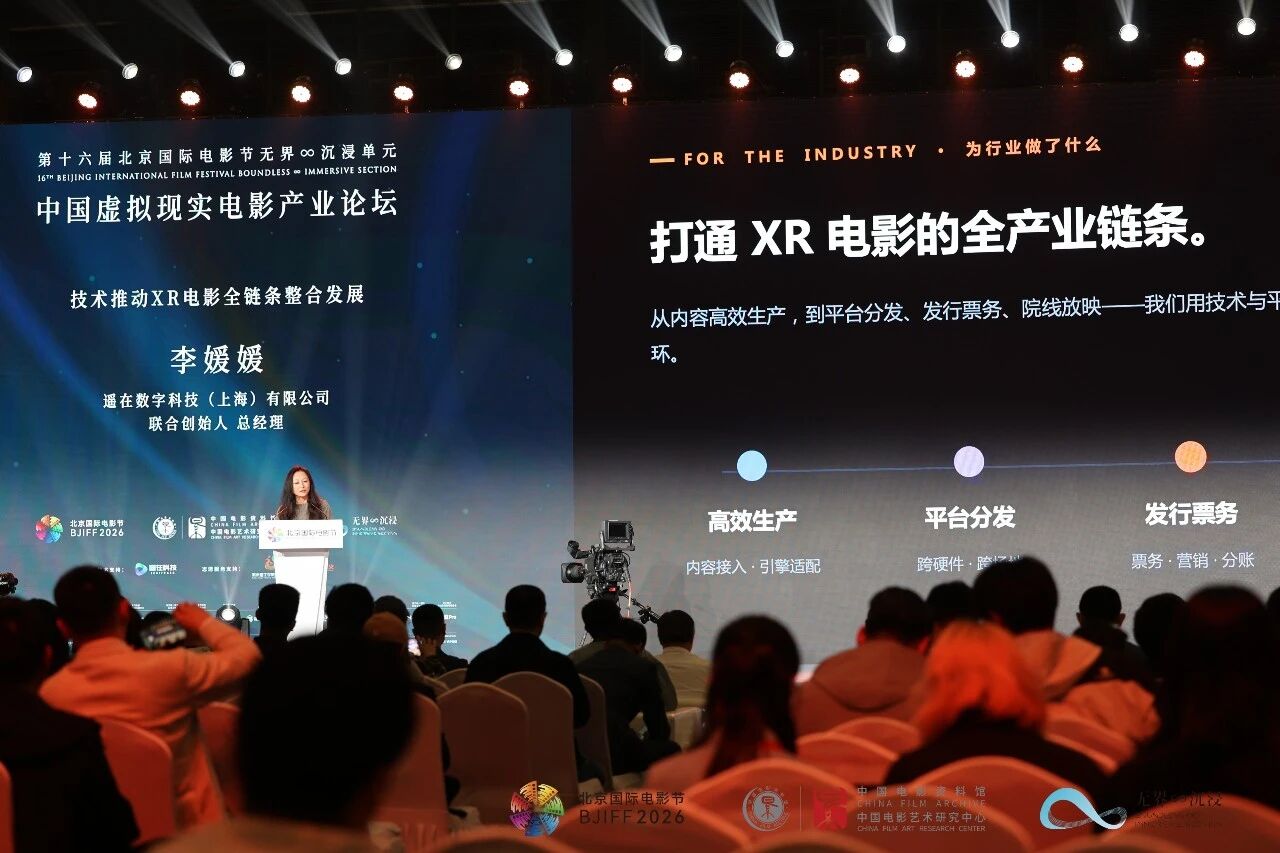
To date, the Insitpace LBE XR Cinema platform has expanded to more than 200 service venues, with over 100 content titles delivered across its network. Li Yuanyuan, Co-founder and General Manager of Insitpace Digital Technology (Shanghai) Co., Ltd., shared nearly four years of exploratory experience in the VR field and introduced a series of forthcoming industry support initiatives. Among them, the AI+ programme spans production through distribution, integrating six core AI capabilities designed for scalable deployment; the VR (Seated) Experience Enhancement Programme aims to significantly improve audience immersion; the XR Cinema Footfall Support Programme focuses on increasing footfall at physical venues; and the XR Media Monetization Programme seeks to unlock the advertising value of XR cinema and enable revenue reinvestment. Li emphasized that "content prosperity drives platform prosperity, and platform prosperity drives high-quality industry growth", adding, "we hope to work with all industry partners to advance the XR film sector together."
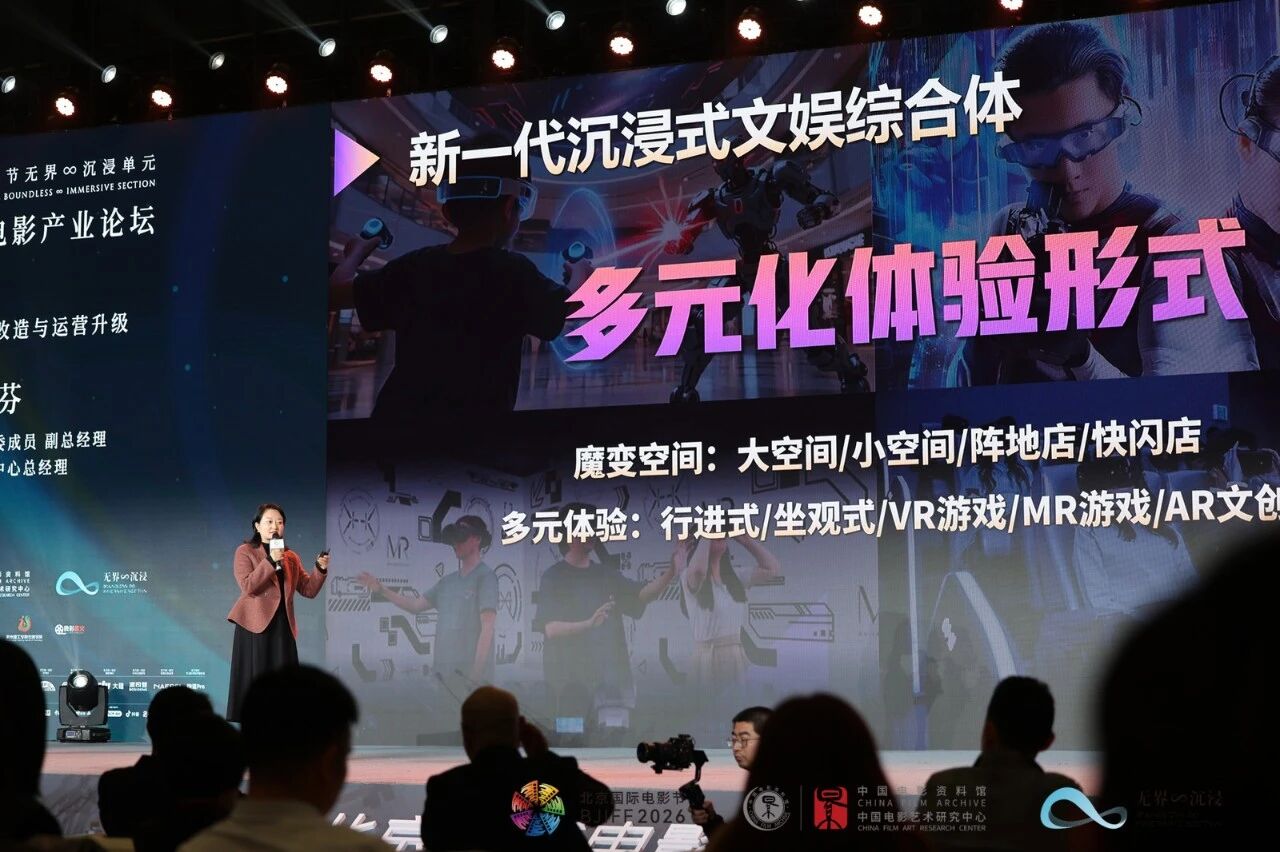
Zhang Yafen, Party Committee Member and Deputy General Manager of Henan Film & TV Production Group, and General Manager of the Oscar Cinema Development Center, shared the Group's practical experience in implementing a dual-driven "culture + technology" strategy, as well as its "five-in-one" development model integrating production, cinemas, distribution, systems and ecosystem building. She noted that moving forward, the Group aims to continuously expand an "XR Film Ecosystem Community", move beyond fragmented production models, integrate resources across the VR film value chain, and foster coordinated collaboration and shared success.
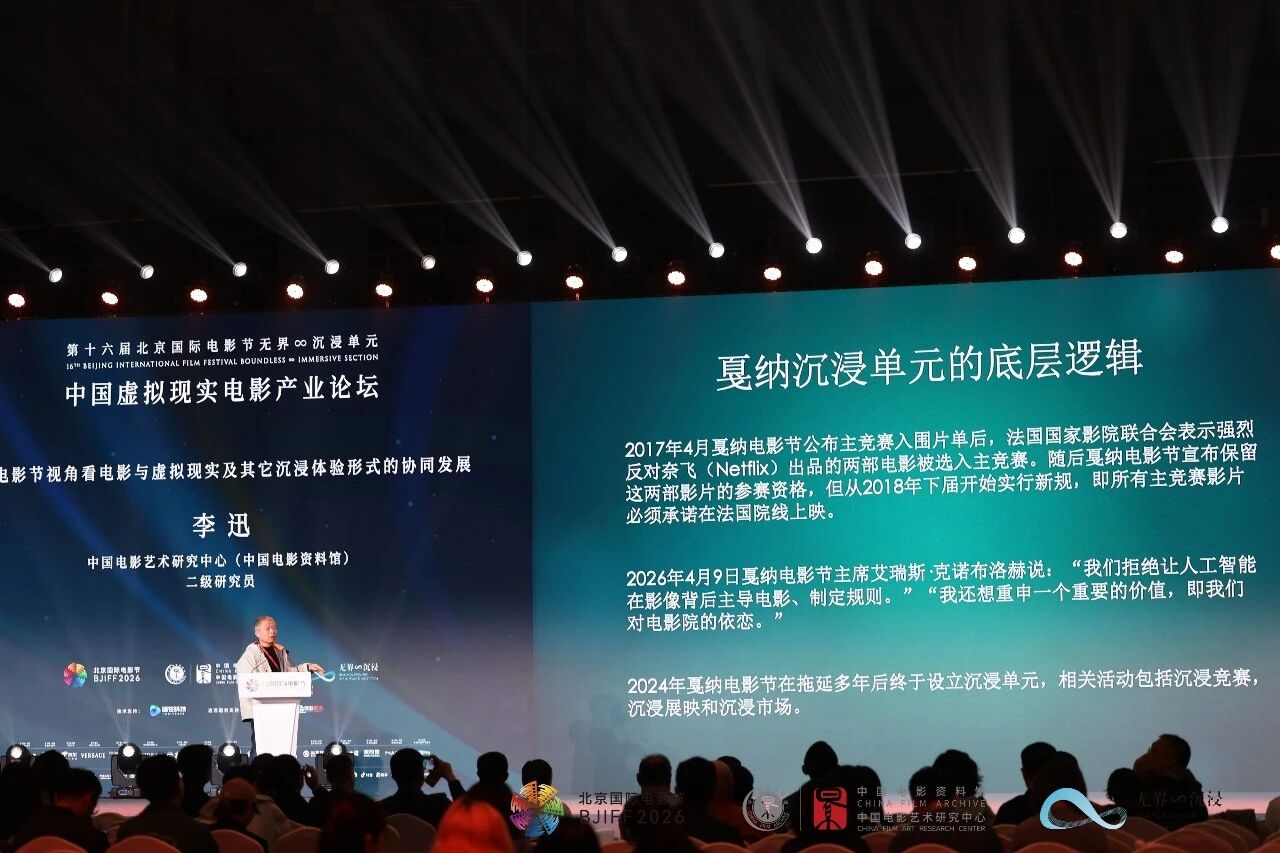
Li Xun, a researcher at the China Film Art Research Center (China Film Archive), shared observations on the development of VR cinema in international film festivals. He noted that major international film festivals such as Cannes and Venice have been consistently increasing their engagement with VR cinema, evolving from screening to competition. He also reflected on VR filmmaking practices, arguing that creators should not focus solely on narrative structure, but also consider the relationship between art and entertainment, while prioritizing innovative audiovisual expression and technological advancement.
Technology and Craftsmanship in Mutual Reinforcement
Deep Integration of VR Technology into the Film Industry
Cross-media storytelling emerged as a focus of the forum. Gao Jieyu, Deputy General Manager of E-Vision Culture; Xu Zhi, Founder of Qinke Media; Zhou Wen, Director of the Department of Digital Media at the School of Arts and Communication, Beijing Normal University; and Zuo Ying, Deputy Director of the Technology Department at the China Film Archive, shared insights on XR-cinema relationship, IP adaptation, cross-media opportunities and challenges, innovations in teaching, and the restoration of classic films. The session was moderated by Chen Jun, Dean of the School of Intelligent Imaging Engineering, Beijing Film Academy.
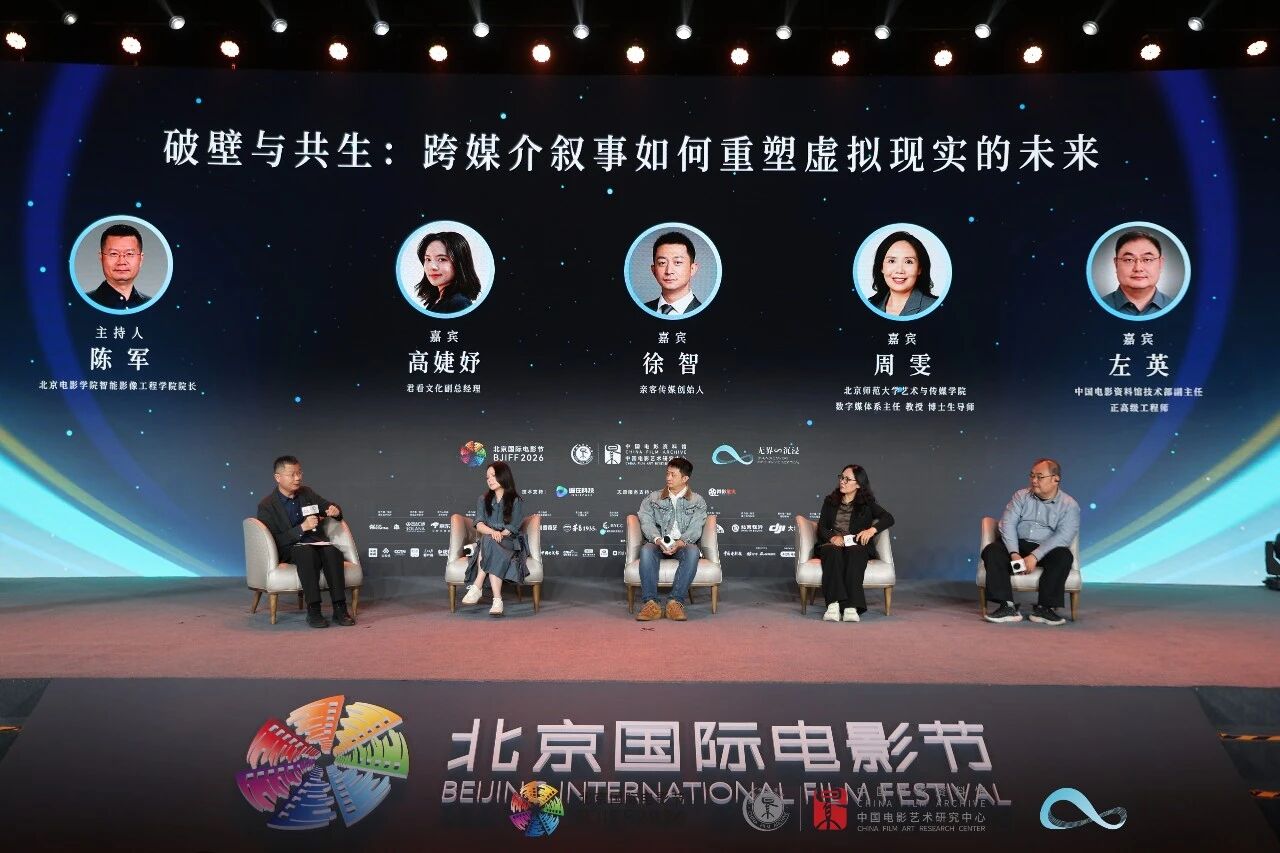
Gao Jieyu drew on the production of Da Sheng Rises XR, an XR adaptation of the animated film The Rise of the Da Sheng Rises. She noted that XR cinema and traditional cinema operate in a symbiotic and complementary relationship: cinema provides XR with narrative foundations and storytelling frameworks, while XR extends a film's promotional reach and unlocks additional IP value. "XR films derived from traditional cinema can support pre-release promotion, and post-release, they can also function as derivative IP products, enabling long-term value creation," she said.
Devourer, produced by Qinke Media, is adapted from the novel of the same name by Liu Cixin. Xu Zhi shared his experience in adapting literary IP into VR works. He argued that VR adaptations should move beyond conventional guided experiences, using interactive design and NPC-driven activity to break away from passive "tour-like" storytelling. "VR technology has fundamentally transformed narrative structures. Creators should leverage its strengths through interaction and visual storytelling, enabling audiences to become active participants in an immersive experience", he said.
"VR is currently one of the most advanced media forms available", said Zhou Wen. She noted that VR enables cinema to evolve from "story telling" to "story living". At the same time, she emphasized that given current technological constraints, the nature of the medium must be clearly defined and its use applied with restraint. Zhou added that VR and AI courses have been incorporated into university curricula, encouraging students to explore the possibilities of emerging media through artistic thinking and engage with cutting-edge fields.
Zuo Ying focused his remarks on the restoration of classic films. He stressed that restoration should not be pursued for its own sake: "We restore classics in order to preserve and disseminate culture, and to bring high-quality works to wider audiences." He noted that new technologies and traditional cultural heritage are not in opposition, but mutually reinforcing. In integrating film restoration with emerging technologies such as VR, he advocated for greater interactivity and content reconfiguration, with particular emphasis on spatial design and immersive engagement to attract younger audiences.
Establishing Industry Standards and a Division of Labor Framework
"Let professionals do what they do best" emerges as an industry consensus
Industrial coordination across the full "production–distribution–screening" value chain was another key focus of the forum. Participants included Fan Fan, founder of VIMO XR and VR director; Hua Xiaofeng, President of HTC China; Liu Chen, Deputy General Manager of Beijing 798 Culture and Technology Co., Ltd.; Tang Yicheng, Founder of The Multiverse Project; and Wang Yanfeng, Senior Partner of Weiling Times. The discussion centered on the current development of the VR film industry across production, marketing and distribution and standardization. The session was moderated by Huangfu Yichuan, researcher at the China Film Art Research Center (China Film Archive).
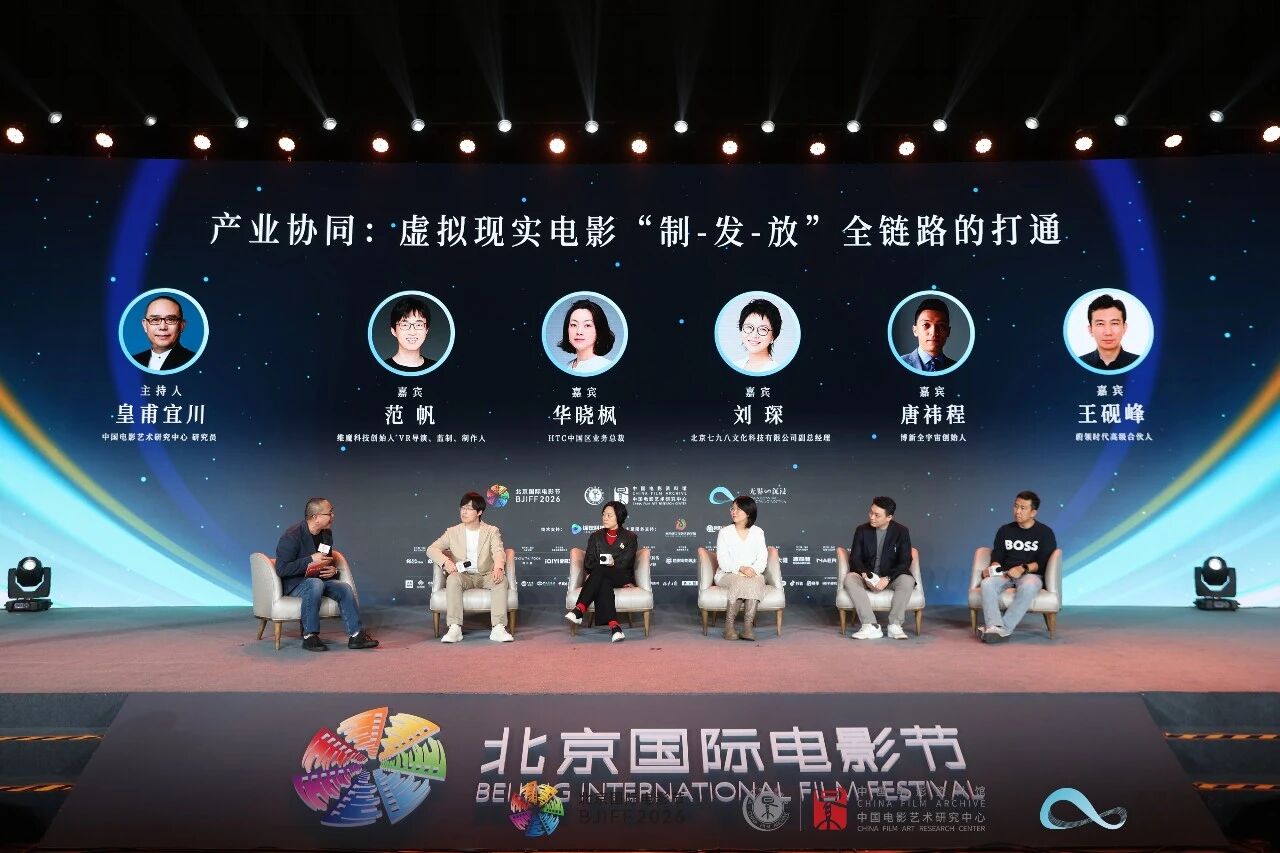
Hua Xiaofeng spoke candidly about the critical role of distribution and marketing operations, noting that the industry still faces challenges such as uncoordinated individual transitions and a lack of professional promotional capacity. "We have strong production and development teams and invest heavily in content refinement, but we hope there are specialized companies within the value chain that can handle distribution and implementation in a more seamless, end-to-end manner", she said.
Fan Fan, who has directed multiple VR films, argued that VR content creation should be built around spatial design and interactivity, with a stronger emphasis on commercial viability and greater production of genre-driven and differentiated works. He added that Chinese creators are already among the frontrunners in the global VR film space, but the industry still requires more partners to complete upstream and downstream integration and establish a clearly defined division-of-labour system.
Tang Yicheng focused on industry standardization. He noted that while the VR film sector has developed rapidly over the past year, it remains in an early stage overall, with ecosystem fragmentation and inconsistencies in hardware and venue infrastructure affecting content distribution and exhibition. He expressed hope that the industry will soon establish a structured division-of-labour system, build a unified standards foundation, and enable specialized collaboration under the principle "Let professionals do what they do best".
Liu Chen expressed strong confidence in the future of VR cinema, suggesting that audience habits could be gradually cultivated through measures such as upgrading traditional cinemas, increasing venue utilisation, introducing virtual screening schedules, and leveraging private-domain audience engagement strategies.
Wang Yanfeng urged creators to place greater emphasis on content richness and emotional resonance, and to develop more high-quality works with innovative narrative approaches. "Content must be the priority—without strong content as the foundation, nothing else can stand", he said.
