

National Memories on the Silver Screen: The Flames of History and the Power of Authenticity
In the summer of 2026, the Chinese summer film season has ignited a profound "historical fervor." From the flames of revolution to the chaotic twilight of the Han Dynasty, and from the silent guardianship of the hidden front to the coming-of-age choices of young heroes - three stylistically distinct yet equally weighty historical films, Crossing, Three Kingdoms: The Beginning, and Hideaway: The Dossiers, are making their successive debuts.
At present, historical films and television works have transcended the confines of traditional grand narratives, leveraging genre-based storytelling and youth-oriented expressions to forge a profound, cross-dimensional dialogue with contemporary audiences. Crossing hit theaters on June 26, followed by the release of Three Kingdoms: The Beginning on July 10. Today, BJIFF invites you to explore these three highly anticipated titles of the year, opening a portal back in time to witness how the silver screen awakens national memories and bridges the war-torn years with today's youth.
Crossing - Returning to the Long March Battlefield through Authentic Location Shooting
As a monumental cinematic work commemorating the 90th anniversary of the victorious Red Army's Long March, Crossing is executive produced by Andrew Lau and directed by Xu Zhanxiong, assembling a stellar cast of powerhouse actors, including Liu Ye, Wang Lei, Yosh, Wang Zhifei, David Wang, and Lin Yongjian. The film focuses on the classic military campaign following the 1935 Zunyi Conference, where Mao Zedong commanded a Red Army force of over 30,000 to break through an encirclement of approximately 400,000 enemy troops, offering a panoramic recreation of the Four Crossings of the Chishui River - widely celebrated as the "masterstroke" of Mao's military career.
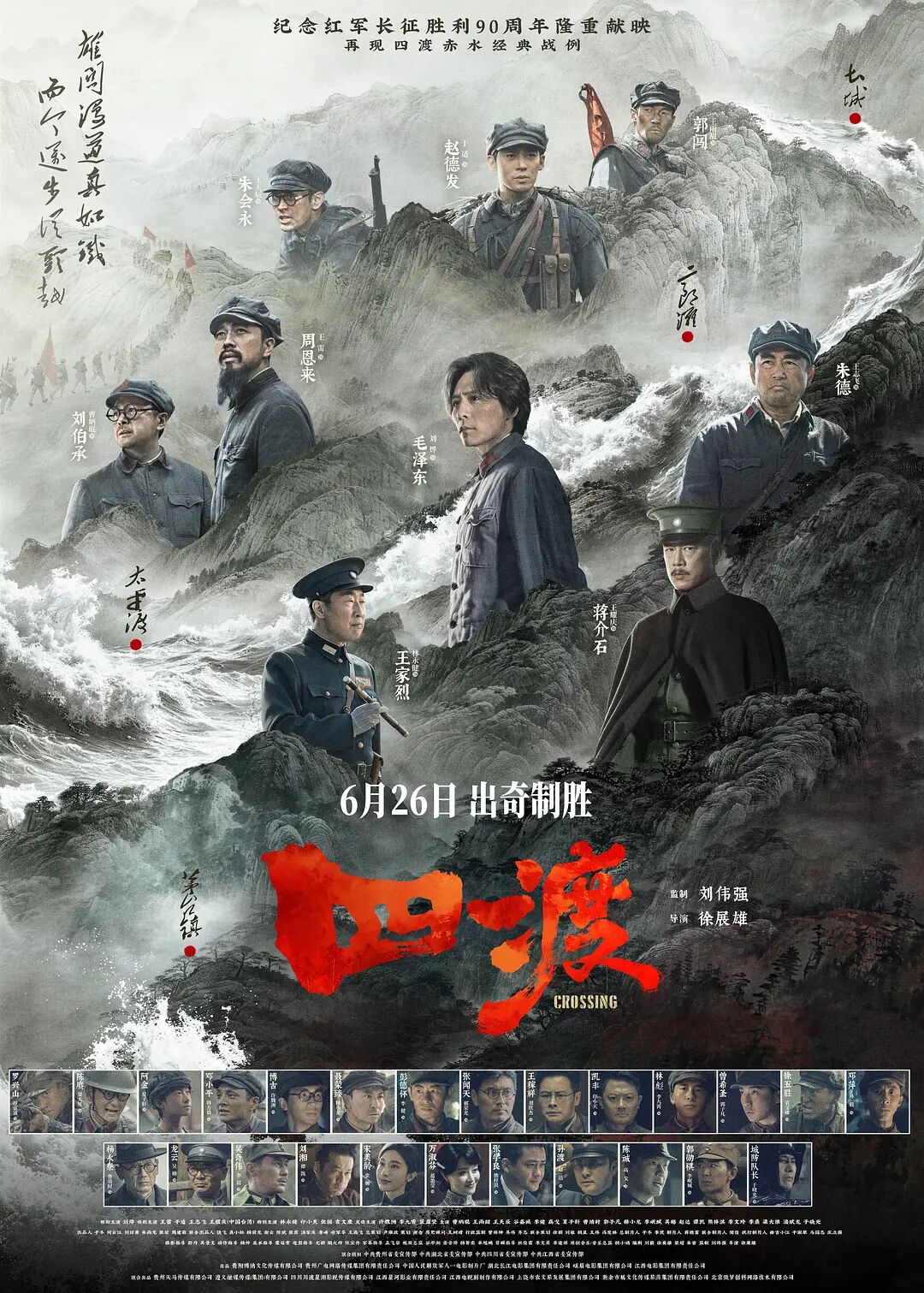
Film Poster for Crossing
What is most striking about the film is its ultimate pursuit of "authenticity." All 32 filming locations and 107 scenes were shot entirely in Guizhou, with the creative team following the exact marching footsteps of the Central Red Army during the 1935 Four Crossings of the Chishui River to complete the on-location production. Even more remarkably, the shooting schedule highly coincided with the historical timeframe of the Red Army's march - the natural environments of fog-locked river valleys and rain-drenched mountain paths were faithfully recreated. Actor Liu Ye recalled a night scene shot at the mountaintop: "We filmed for a full five hours. Even wearing various modern thermal garments, the freezing cold was still unbearable." Cao Bingkun, who plays Liu Bocheng, reflected: "We only filmed for four or five hours, but the Red Army endured this every single day back then. How did they persevere? This is the true meaning of on-location shooting - it is not an act of asceticism, but a way of drawing closer to history."
Crossing pioneers a new avenue of "intellectual aesthetics" within the revolutionary film genre. By utilizing miniature sandboxes paired with pinhole cameras, the film successfully visualizes and demystifies complex military strategies; simultaneously, it constructs three interwoven narrative threads: high-level strategic decision-making, frontline combat execution, and the overarching battlefield dynamics. Zhang Yiwu, a cultural critic and professor at Peking University's Department of Chinese Language and Literature, observed that the film "shatters the singular mold of past revolutionary films that relied heavily on emotional melodrama," instead rendering intricate military campaigns "logically clear, highly accessible, and profoundly engaging" to perfectly align with the aesthetic sensibilities of today's youth.
Three Kingdoms: The Beginning - Reconstructing the River of History Through Animation
If Crossing chronicles a military miracle on land, then Three Kingdoms: The Beginning, released on July 10, turns its lens toward a more distant and profound historical depth. Produced by Light Chaser Animation and crafted by the original creative team behind Chang An, the film is directed by Xie Junwei. Serving as the inaugural chapter of the "Three Kingdoms Trilogy," it transports the narrative back to Luoyang during the twilight of the Eastern Han Dynasty: chronicling the political turmoil incited by the Ten Attendants, He Jin summoning Dong Zhuo to the capital, Dong Zhuo's subsequent tyrannical reign, and the ultimate crusade led by the eighteen warlords against him.
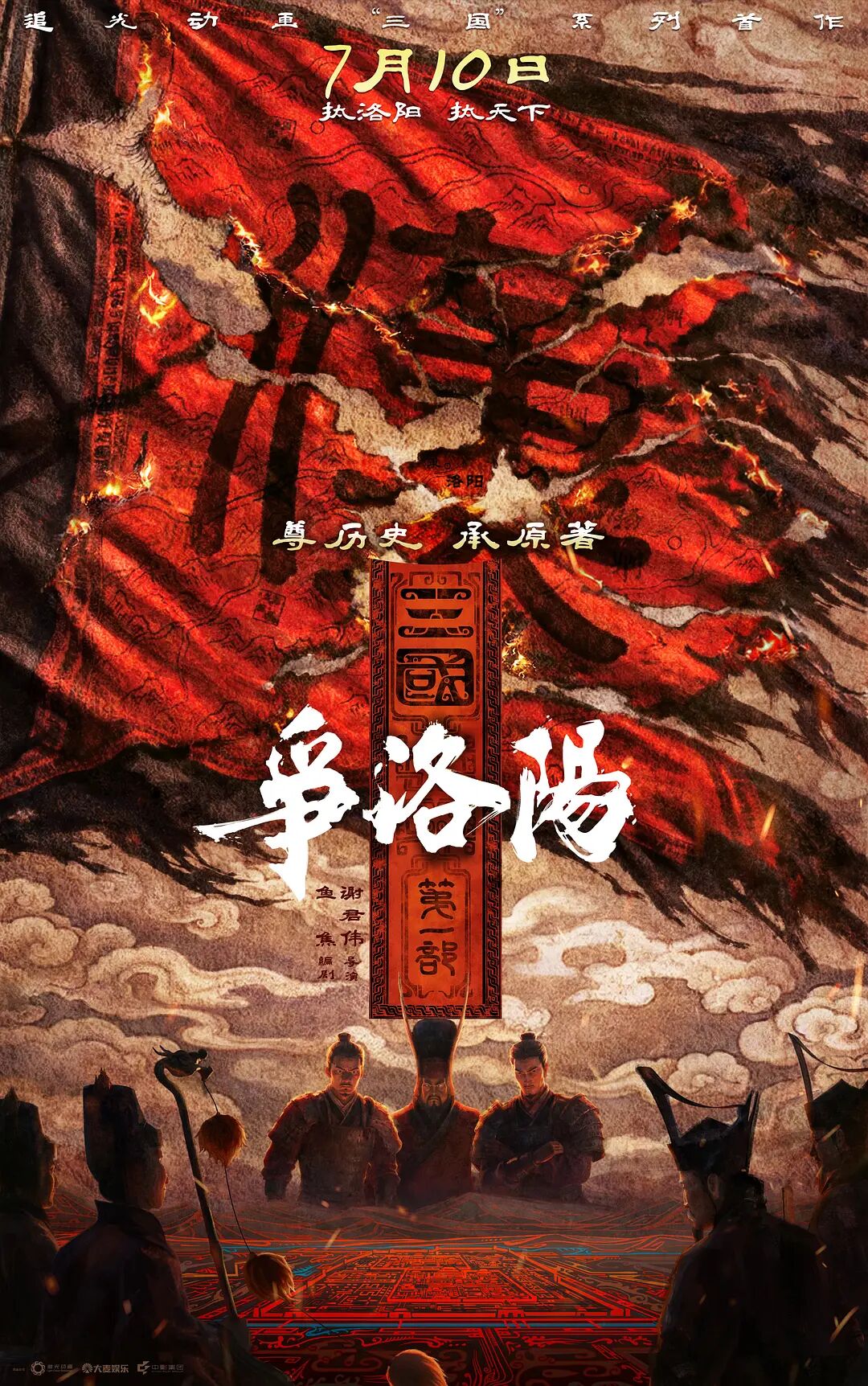
Film Poster for Three Kingdoms: The Beginning
Told primarily through the perspective of a young Cao Cao, the film shapes a "youthful" warlord who defies traditional stereotypes: at this stage, he is still observing and exploring, a firsthand witness swept up in the turbulent currents of his time. In their youth, Cao Cao and Yuan Shao shared a common ideal of restoring the Han Dynasty, yet they gradually drifted apart, torn by the struggles of power and shifting political tides. The film meticulously reconstructs the architectural styles, costumes, etiquette, and vibrant streetscapes of the Eastern Han Dynasty, culminating its visual zenith in the iconic sequence of the Three Heroes combating Lv Bu; here, the fluidly choreographed martial arts storyboards and the magnificent spectacle of armies clashing fully unleash the unique expressive power of the animation medium. Three Kingdoms: The Beginning proves that animation is not merely a vessel for mythological fantasies, but is equally capable of commanding grand and weighty historical narratives.
Hideaway: The Dossiers - The Silent Power of the Hidden Front
On August 28, Hideaway: The Dossiers, directed by Zheng Dasheng, will offer audiences an entirely different pathway into history. Drawing from true historical events of the Party, the film employs a documentary-style reconstructive approach to chronicle the gripping tale of underground CPC operatives who, during the occupation of Shanghai in 1942, safeguarded the highly classified "Central Archives" within an old Shikumen residence at No. 52 Xiaoshadu Road.
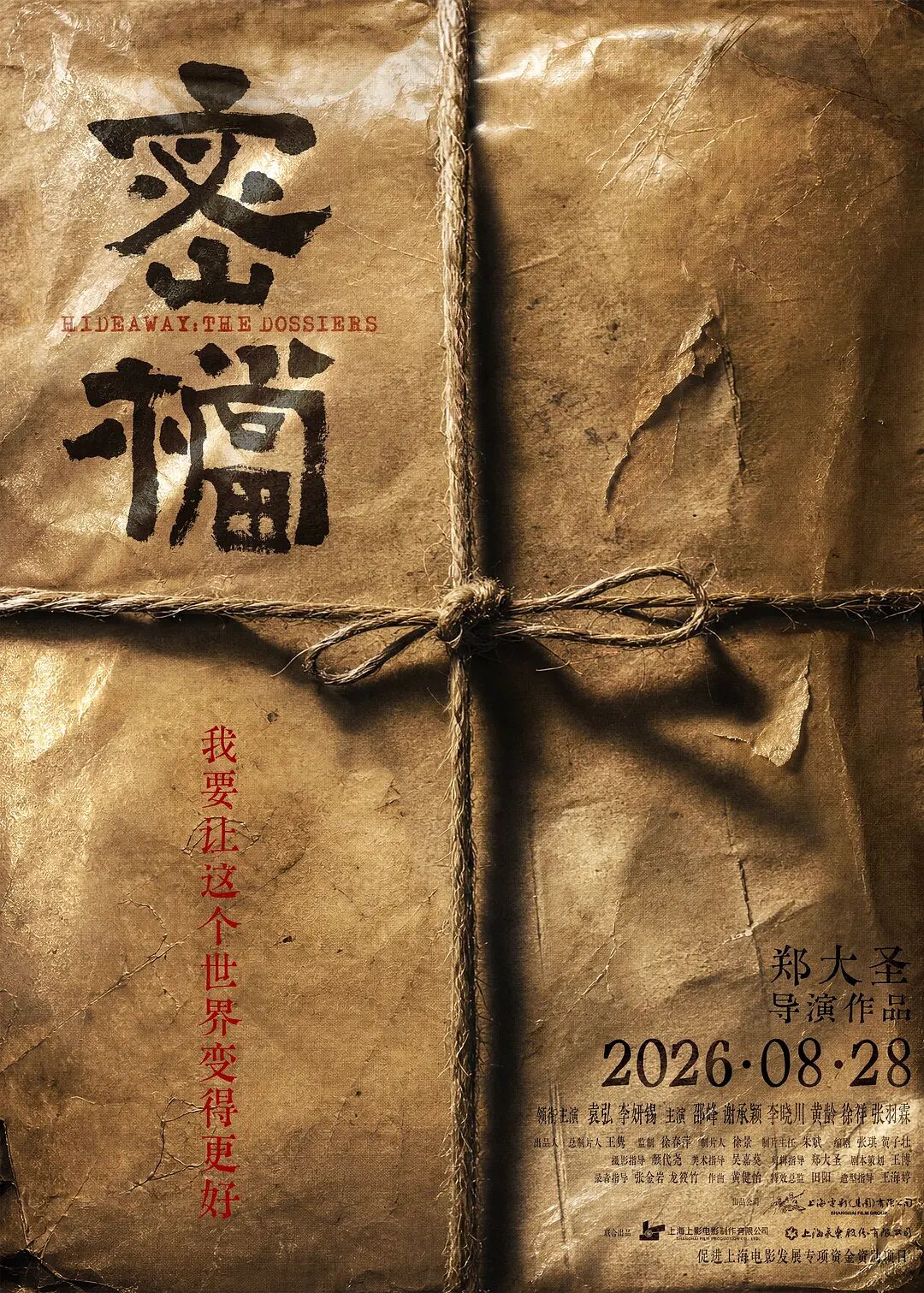
Film Poster for Hideaway: The Dossiers
Director Zheng Dasheng stated, "We utilized a documentary-style approach to portray that heart-pounding hidden battlefield, hoping that through everyday, down-to-earth details, audiences can feel the profound strength of enduring humiliation and heavy burdens." Within the film, surrounded by Japanese and puppet forces where friend and foe are indistinguishable, every glance and casual conversation in the small courtyard could trigger a life-or-death crisis. Lead actress Li Yanxi stars as an underground Party member lurking amidst the common folk - devoid of a hail of bullets, yet equally thrilling and perilous. It is worth noting that Hideaway: The Dossiers themed exhibition has already opened on the second floor of the Shanghai Film Museum, featuring realistic replicas of key scenes such as the alleyways and traditional guest rooms.
From the Chishui River valley in Crossings to Eastern Han Luoyang in Three Kingdoms: The Beginning, and further to the Shanghai alleyways in Hideaway: The Dossiers - this summer, Chinese cinema uses its most authentic lens to bring us back to historical scenes, touching the warmth of our national memories. Although drawn from different eras and battlefields, all three films share the sincerity of location-based reconstruction, the ingenuity of genre storytelling, and an audiovisual language that resonates with contemporary aesthetics, translating the heart-pounding choices and steadfast dedication of the war-torn years and the long river of history into vivid, tangible stories on the big screen. History is never far away; it reunites with us within these very frames of light and shadow. This summer, let us step into the theaters together to feel the flames of history and the power of authenticity on the silver screen.
This summer, let us step into the theaters together to feel the flames of history and the power of authenticity on the silver screen.
