


Project Pitches Training Camp Commences! Sound Mentor Wang Chong: Sound Is Not a Post-Production Fix - It's Part of the Narrative
The Project Pitches Training Camp of the 16th Beijing International Film Festival (BJIFF) is now in full swing. On January 24, veteran sound mentor and sound designer Wang Chong delivered a professional training session to participants. With years of experience in film and television sound creation, Mentor Wang Chong's portfolio spans a diverse range of genres, including animation, drama, suspense, and action. He has contributed to the sound production of hit works such as Hidden Blade, the Ne Zha series, and I Am What I Am 2, establishing himself as an industry benchmark through imaginative auditory storytelling and masterful technical expertise.
Film and television art is "audiovisual art", where sound and imagery are equally indispensable. In this session, Mentor Wang Chong not only demonstrated the sound production process, but also shared creative concepts and modern working methods through concrete case studies, deepening participants' overall understanding of the art of film and television sound.
Sound Finally "Has a Seat at the Table"
As audiences have become increasingly discerning in their perception of film and television works, the role of sound in cinematic creation has grown ever more prominent. Particularly in genres such as horror and thriller, it is no longer merely background but a key driving force in storytelling. Mentor Wang Chong pointed out that sound can significantly enhance the artistic impact of film and television works through three core functions: "emotional guidance", "spatial construction", and "establishing a sense of realism". Speaking about the first-time inclusion of a sound design class in this year's training camp, he smiled and said, "Now, sound finally 'has a seat at the table'."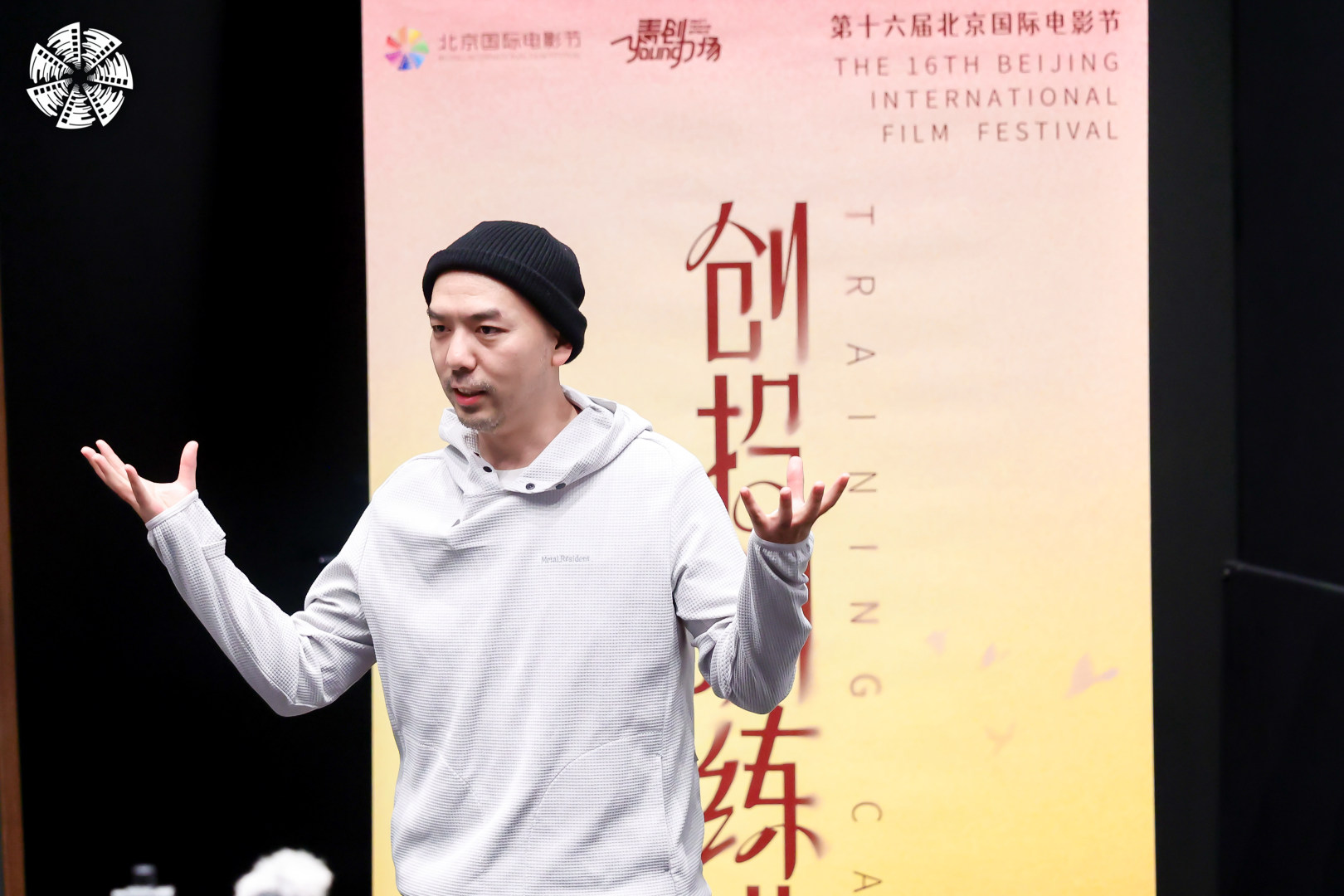
Sound Is Not a Post-Production Fix - It's Part of the Narrative
In film and television creation, sound should not be treated as a remedial step in post-production but should be designed as a core element from the very beginning of narrative conception. It is not merely an auditory component but a cohesive narrative whole formed by the integration of four elements: dialogue, ambient sound, sound effects, and music. These four elements complement each other, jointly driving the plot and shaping the atmosphere. Drawing from his creative practice, Mentor Wang Chong provided an in-depth interpretation of the narrative functions of these four elements: the realism of dialogue lies not in enunciation but in accurately conveying character personality; ambient sound focuses on constructing the story's space, serving as the critical foundation for a scene's authenticity; sound effects lend weight to actions; and music acts as "the steering wheel of emotion".
The Best Sound Design Sometimes Means Stepping Back
Mentor Wang Chong emphasized that the use of sound in film and television is not about sheer intensity, nor should it be based solely on loudness to capture the audience's attention. For instance, in a scene where a father tucks his child into bed and then prepares to close the door quietly, opting for a subtle, clean "click" of the latch rather than a conventionally loud door-shut sound can often better reveal the father's character and uncover the delicate emotional bond between the characters.
The highest art of sound design lies precisely in being "invisible". "When the audience is unaware of the presence of sound design, it has truly accomplished its task." The reason people feel comforted by birdsong in a natural environment is that the brain actively filters, selects, and blends sounds to create a naturally unified auditory experience. In film creation, however, sound designers must take the opposite approach: by deliberately isolating, layering, and meticulously mixing sound tracks, they can recreate that seamless, organic sensation for the audience in a theater. This "invisibility" is not the absence of sound but rather its profound integration with the visuals, narrative, and emotional tone. When sound no longer attempts to fill every auditory space, the narrative gains room to breathe.
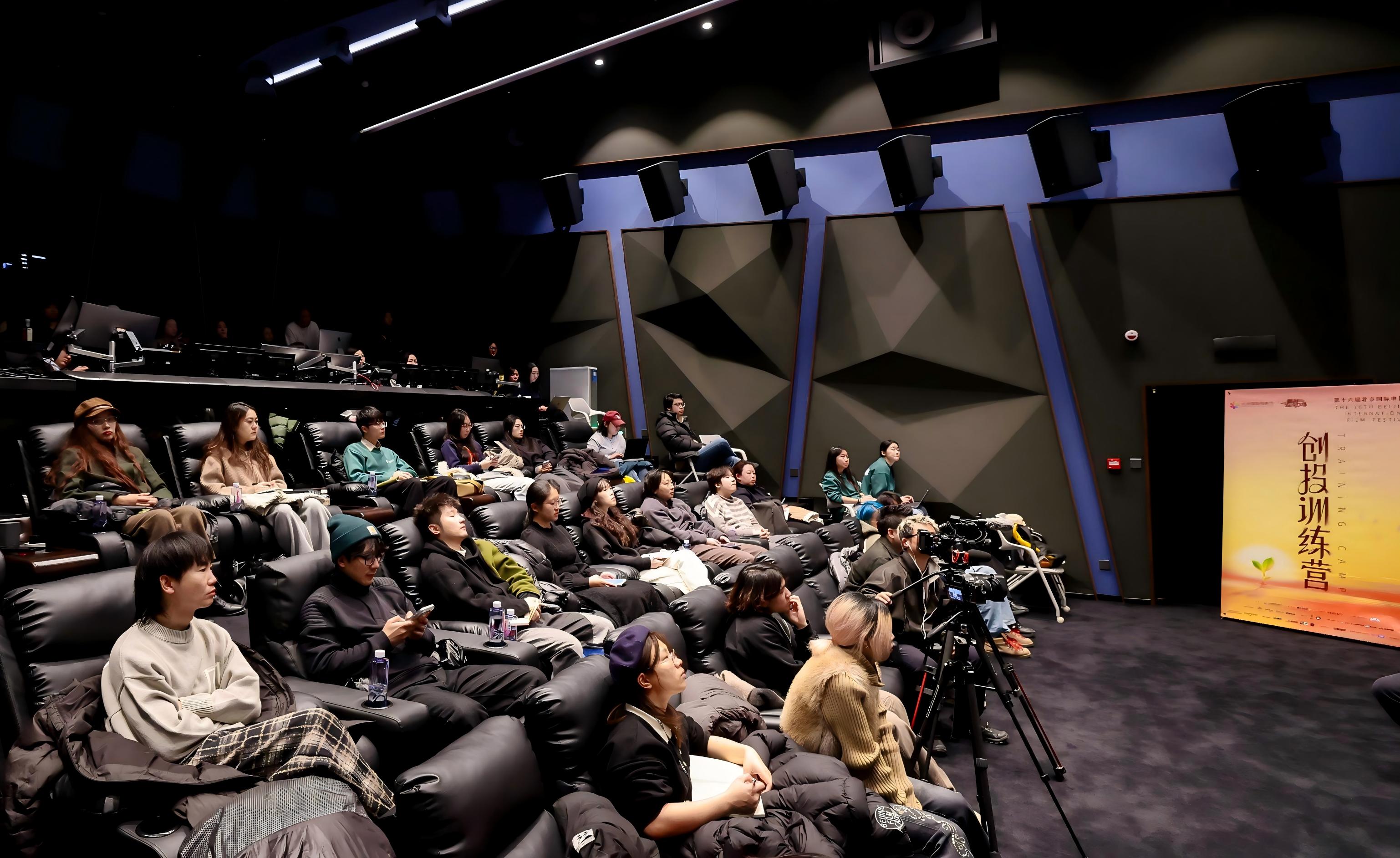
During the Q&A session, Mentor Wang Chong offered detailed insights in response to participants' questions on sound creation.
Q1: Why is it sometimes necessary to layer over 60 or even 80 soundtracks during post-production?
Wang Chong: Early in my career, I often layered numerous soundtracks. However, I've come to understand that the essence of sound design lies in refinement rather than sheer accumulation. The number of tracks is not a gauge of a film's quality; ultimately, audience appreciation serves as the true validation for the entire production team. Today, I encourage my team to limit each sound layer to no more than eight tracks during sound design. This guideline draws from the physical constraints of analog tape recorders, yet it is these limitations that compel my team to make the most precise creative choices, resulting in more effective sound design.
Q2: How can vocal tones be altered to create a hoarse, alienated human voice?
Wang Chong: Sound design requires a strong foundational anchor. Once you grasp the underlying logic of voice transformation, the creative process unfolds naturally. For instance, when designing a zombie's voice, we start by establishing that its vocal cords are damaged - meaning it cannot produce a forceful growl, and any utterance would inherently sound hoarse and fragmented. Similarly, for a mutated human voice, it's crucial to define the nature of the mutation: has it transformed the person into a monster, or is it simply a change in physical scale? With these core concepts clarified, we can achieve targeted and precise sound effects.
Q3: In dubbing, is the workflow based on first having the visuals and then having voice actors dub according to the footage, or is it recording the audio first and then developing the visuals?
Wang Chong: In live-action productions, synchronized sound is typically recorded on set. By contrast, animated films often prioritize audio creation before visuals. For example, in Ne Zha 2, voice actors recorded their performances in the studio first. The audio was then placed on the timeline, serving as a reference for animators to refine the visuals and synchronize mouth movements accordingly.

Q4: What is the current state of domestic foley technology, and does foley creation rely solely on the accumulation of life experience?
Wang Chong: I believe the professional standards of domestic foley technology are now on par with those in Hollywood. The industry has matured over many years, with numerous companies handling international projects. I'm frequently asked whether foley is essential for a given project, and my response is always affirmative. That said, it's not merely a matter of budget; what truly counts is the foley artist's life experience and extensive practical training. For example, when recording the sound of flipping pages, if it doesn't feel authentic, you must experiment with different book thicknesses and paper textures, as every detail influences the outcome. In a close-up shot, the ideal, textured page-turn sound often emerges only after testing hundreds of different books.
Q5: How can someone without a formal academic background become a professional sound director?
Wang Chong: It demands a substantial commitment to learning over time. When I entered the industry, I observed my colleagues' sound production workflows, attempted them myself, and then sought targeted guidance on specific challenges. Beyond this iterative practice, it's vital to watch a wide array of films and actively analyze them: while viewing, continually ask yourself, "How would I approach the sound design here?" You can also mute the audio and focus solely on the visuals to discern how sound conveys emotion. Over time, this builds your own system of judgment and creative intuition, helping you identify where sound truly elevates a film.

Q6: In student film crews with limited budgets, besides capturing the audio during filming and ambient sounds, are there any other types of sounds that should be recorded on set?
Wang Chong: Sound creation often involves an element of serendipity. When you encounter fitting sound material during filming or in daily life, it's essential to capture it immediately. If such moments don't occur, you'll need to fabricate the effects in post-production. For instance, while shooting a night scene in a Shanghai alley, I overheard a couple arguing and quickly recorded it. That genuine ambient audio was later incorporated into the final film. In reality, many exceptional sound designs and inspirations arise from these unplanned discoveries rather than rigid pre-planning.
Q7: How should sound design be approached when filming in a green screen studio, and what should be considered for on-set sound recording?
Wang Chong: Sound design should be integrated from the outset. We usually review the script and prepare materials in advance. Whether on-set audio from a green screen studio is usable depends on the conditions. For example, if wind machines are running during filming, the recording will likely be compromised, so they should be deactivated to secure clean audio. It's also important to capture actors' shouts, roars, fight sounds, and key dialogue on location whenever feasible. If the quality falls short, re-recording should be arranged promptly. More subtle layers and details can then be enhanced during post-production.

Mentor Wang Chong delivered an in-depth exploration of film and television sound for trainees of the Project Pitches Training Camp, spanning theoretical foundations, case studies, technical discussions, and industry perspectives. Throughout, he emphasized his philosophy of sound creation: "giving visuals weight and making emotions audible", dedicated to crafting precise designs that deeply resonate with audiences.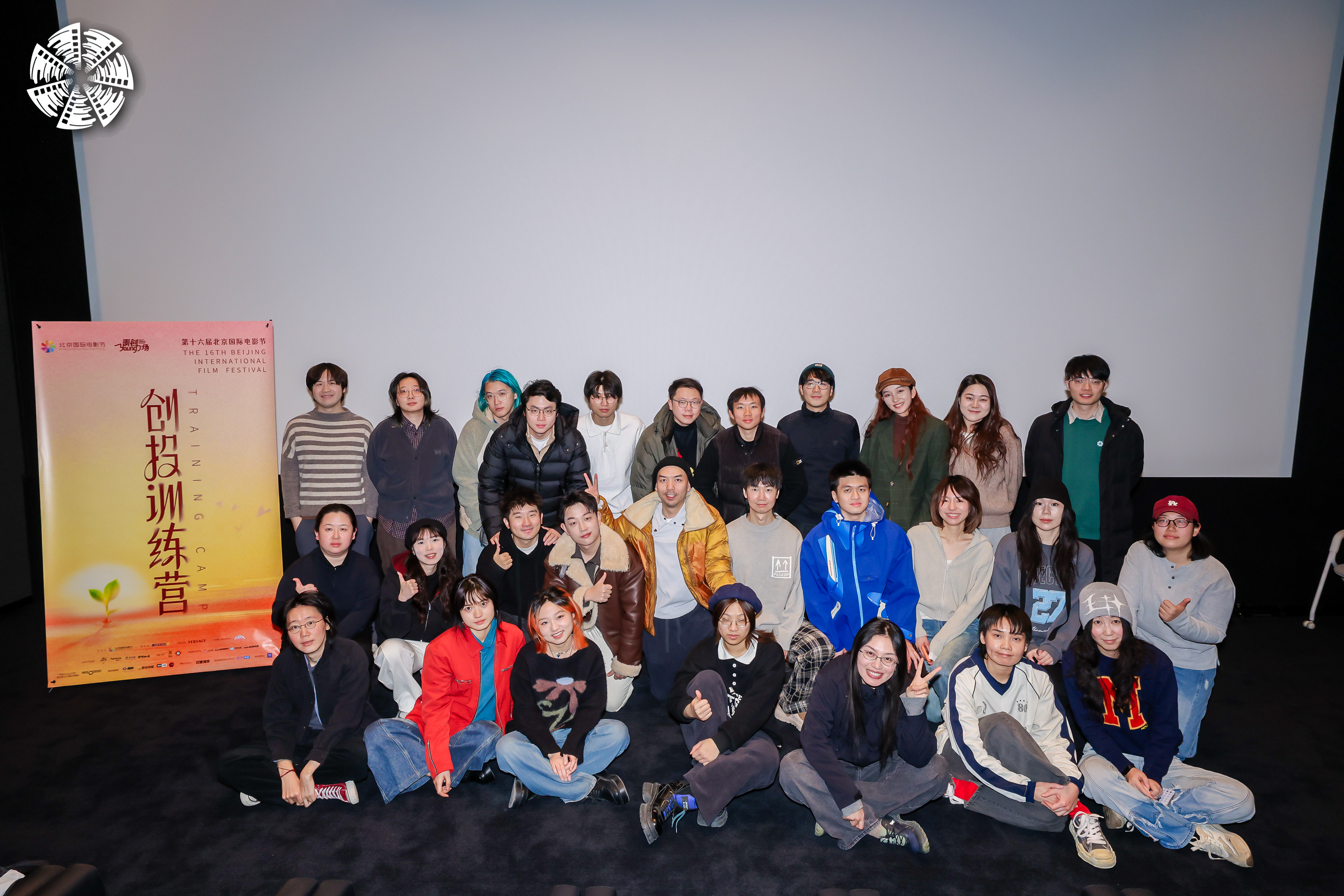
The inaugural sound design class at this year's Project Pitches Training Camp has concluded successfully! We eagerly anticipate trainees applying these insights to their future endeavors, allowing sound to enrich their narratives.