
Film+
-
Game-Based Animated Films Exhibition

- Overview
- Exquisite Appreciation Event
- Selection & Screening of College Student Works - Excellent Animated Short Films
- Selection & Screening of College Student Works - Outstanding Animated Short Films
- Selection & Screening of College Student Works - Jury-Recommended Animated Short Films
- Selection & Screening of College Student Works - Shortlisted Animated Short Films
- AIGC Game IP Short Video Competition
- E-Sports Celebration for Filmmakers
- Ceremonies
- End of River" School-Enterprise Cultural Seminar
- Everlasting BJIFF on Campus Series
- Previous Highlights
-
Film + Fashion Section
-
Star Horizon Project
-
Run for Fun
-
Art&vision certain unit
-
Animation Films Section Series Activities
Charts Clear the Fog, Aligning Every Frame: Jessica Chens Production Methodology at the NEWHER Workshop Production Training Course
"Filmmaking is, at its core, a practice of witnessing each other's character and craft - a shared journey of cultivation with all of you."
The current film production industry stands at a crossroads where opportunity and uncertainty intertwine. The digital wave is sweeping in, the impact of streaming platforms has reshaped traditional distribution models, and technological innovations have opened up new creative possibilities. Yet, on the other side, dynamic box office fluctuations, the tension between artistic vision and commercial viability, and the struggles faced by emerging filmmakers as they take their first steps - these remain persistent hurdles for industry professionals.
Jessica Chen, CEO of Easy Production, is a "dual-faced" producer who navigates the realms of creativity and commerce with finesse. From Go Away, Mr. Tumor to Lost, Found, she has leveraged her unique aesthetic sensibilities and decisive business acumen to produce numerous works that resonate both artistically and with mainstream audiences.
Jessica Chen also served as a production mentor at the 15th Beijing International Film Festival (BJIFF)'s NEWHER Workshop. The short film by a young director she guided went on to receive three honors at the NEWHER Award Ceremony during the festival. Always standing at the forefront of the industry, she demystifies the fundamental logic of the film business for emerging filmmakers through her calm observations and direct advice.

Jessica Chen, NEWHER Workshop Production Training Course Mentor
At this year's NEWHER Workshop production training course, Jessica Chen introduced eight production charts that condense years of industry expertise. With clear logic, she provided young female filmmakers with a roadmap: how to align creative granularity, minimize inefficient consumption in the workflow, and move their film projects forward more confidently and precisely.
Mutual Selection: Using a 30-Film List to Test Shared Vision
"At the core of early-stage collaboration is a shared vision between the producer and the director."
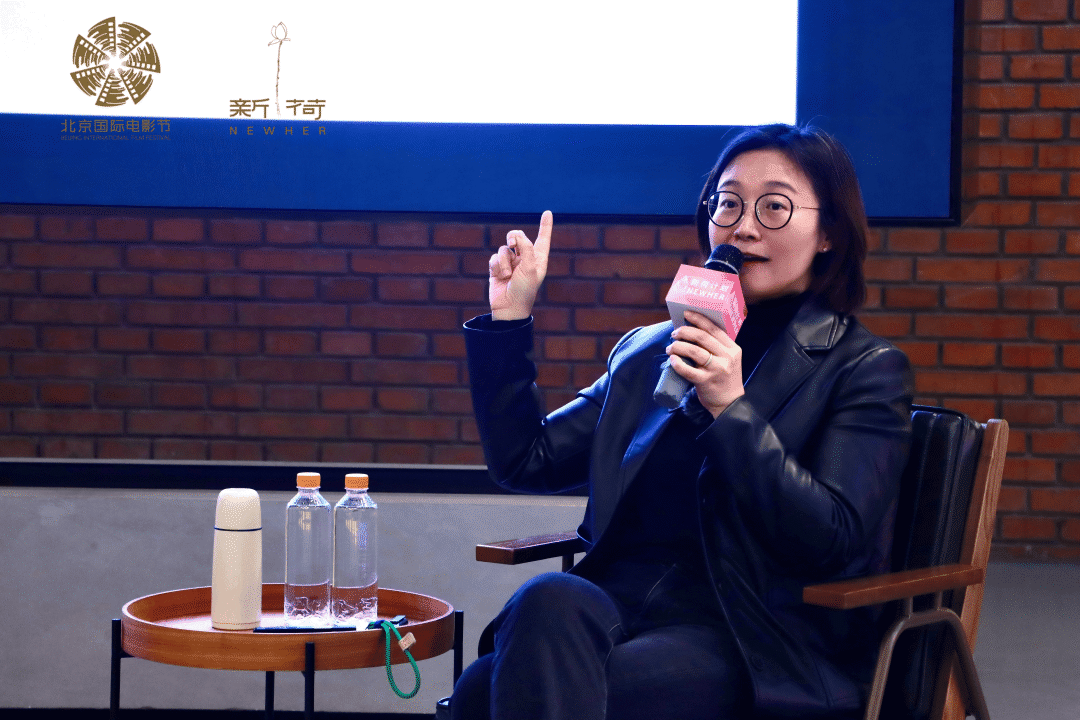
Jessica Chen, CEO of Easy Production
The first chart Jessica Chen introduced asked the audience to list 30 domestic films they had willingly paid to watch over the past three years. "The films you pay to see reveal your values, aesthetics, desires, traumas, and cultural tribe," she explained. She firmly believes that who you are, what issues you care about, and what you want to communicate are all embedded in the images you choose.
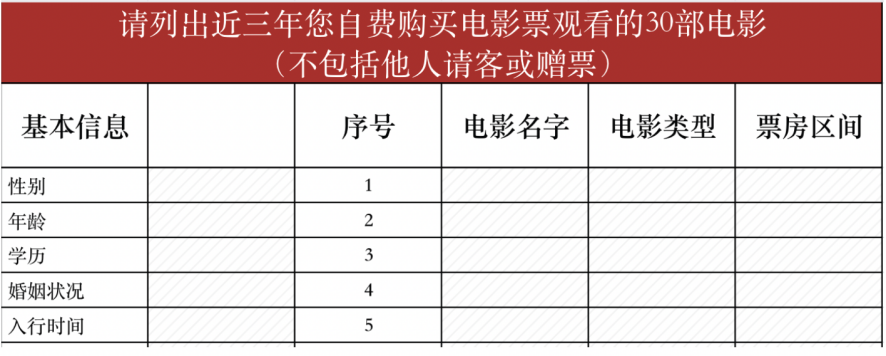
Film Viewing Survey Form
The first interaction between a producer and a director is fundamentally about understanding each other's aesthetic sensibilities and emotional inclinations. This film list serves as the most direct litmus test for compatibility, determining whether the foundation for future collaboration is solid.
The 5W Principle: A Refined Approach to Work
"The first step after forming a team is reaching a consensus on 'what to shoot'."
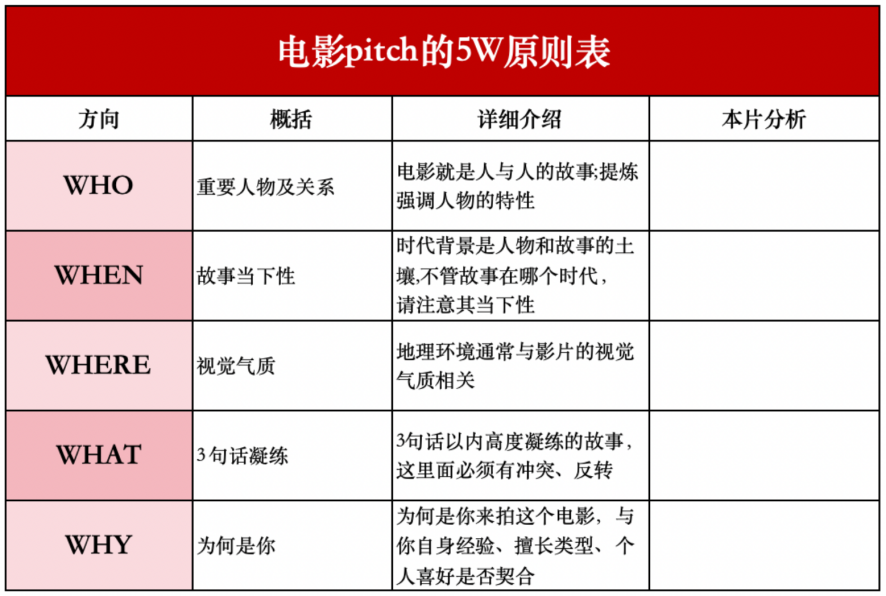
5W Principle Chart for Film Pitching
In an effective film pitch, rather than piling up plot details, it's more essential to first establish a clear structure of expression. The "5W Principle Chart" introduced by Jessica Chen serves as a tool to help creators organize their thinking: starting from the core character, clarifying the temporal context and spatial texture of the story, then concisely articulating the narrative trajectory and dramatic tension, and finally returning to the creator themselves to explain their creative motivation and personal connection to the project. When these five dimensions resonate with one another, the project becomes not only clearer but also more compelling. For emerging creators, this framework serves both as an outline for self-calibration and a communication pathway to engage others.
Jessica Chen remarked, "Film is a concrete visual art product, but everything originates from the creator's core intention. The purity, sincerity, and depth of life experience embedded in this initial impulse determine whether the seed of the story can take root and grow."
Matching Needs: Using Maslow's Theory to Determine Mass-Market or Niche Appeal
"Whether the director personally likes it doesn't matter - what matters is whether it can resonate with the audience."
Producers and directors must clearly identify the target audience for their films. Jessica Chen's third chart precisely links Maslow's hierarchy of needs theory with film subject matter:
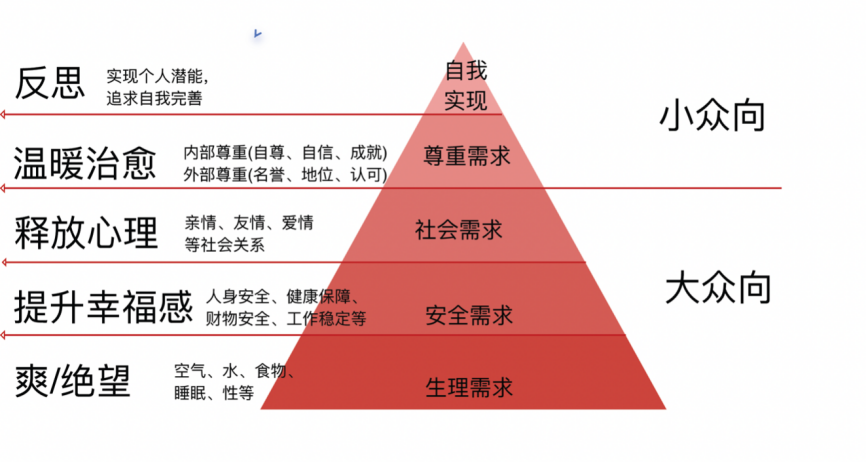
Maslow's Hierarchy of Needs and Film Subject Matter
For films aiming for substantial box office success, the subject matter should be closely tied to the three fundamental needs: physiological, safety, and social needs (such as family and friendship). In contrast, films that delve into profound themes like human nature exploration and self-reflection correspond to higher-level needs - esteem and self-actualization - and tend to appeal to niche audiences.
She provided examples to support this: Dying to Survive addresses physiological and safety needs, making it a mainstream blockbuster; Hi, Mom focuses on family bonds, a social need, striking a chord with a nationwide audience; while Anatomy of a Fall, which explores gender dynamics and touches on self-actualization and esteem needs, falls into the category of a niche arthouse gem.
The Onlooker Sees Clearly: Using a Consensus Form to Validate the Script's Value
"The clearer the core consensus, the richer the audience's viewing experience, and the more powerful the word-of-mouth communication."
Once the script is completed, questions like "Is it clearly written?" and "Does it meet genre expectations?" must be repeatedly asked. More critically, actors' interpretations of the script may diverge from the main creators' intentions. To address this, Jessica Chen introduced a fourth chart: the Script Consensus Analysis Form.
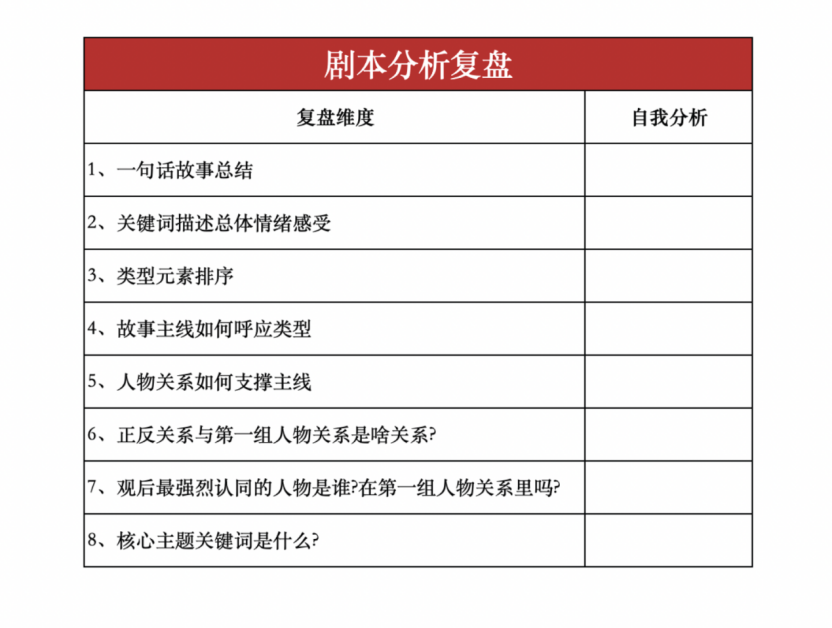
Script Consensus Analysis Form
The underlying logic of commercial cinema lies in the tight alignment of core emotions, plot, value positions, and moral stance. "Those directly involved can't see clearly, while onlookers see it all." By sharing this form with trusted individuals to gather feedback, one can quickly assess whether the script is clear and its main storyline is compelling.
Financial Support: Clarifying the Budget's "Breakeven Point"
"Filmmaking is physical - it requires financial backing."
Budgeting issues permeate the entire production process. Jessica Chen provided a core calculation formula: (Production Cost + Marketing & Distribution Cost) × 3 = Box Office Breakeven Point.
Using this formula, directors can assess whether the budget proposed by producers is reasonable, and both parties can reach a consensus on the scale of expenditure and box office expectations. The budget is not static but dynamically adjusted. After completing a rough budget estimate, a healthy trust needs to be established among the core creators. The primary thing to confirm is whether the producer and director possess the ability to secure premium financing/investment and the decision-making power.
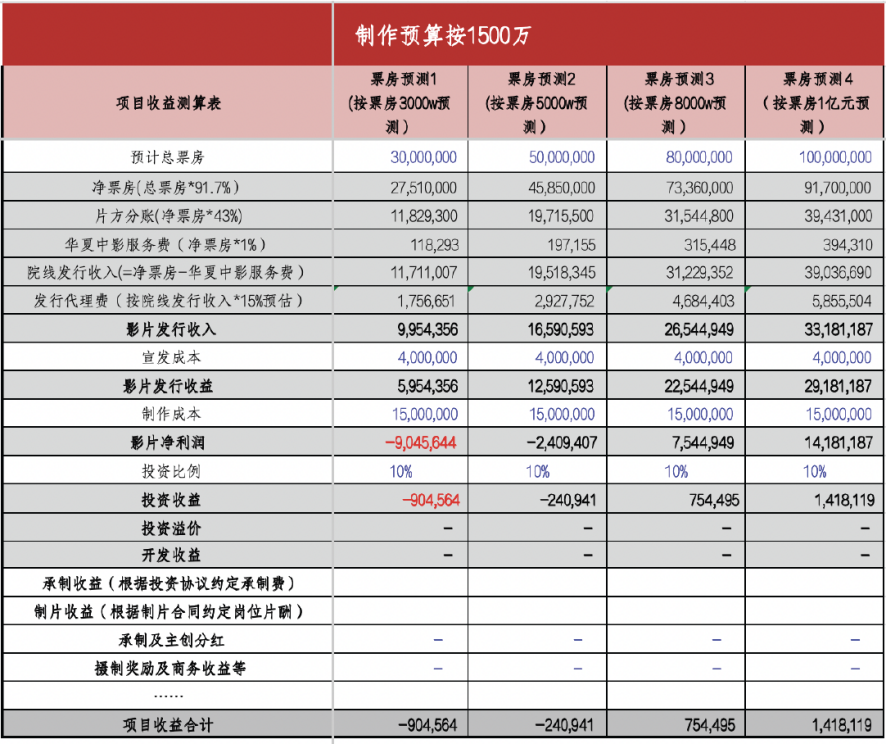
Single-Project Profit & Loss Estimate Sheet
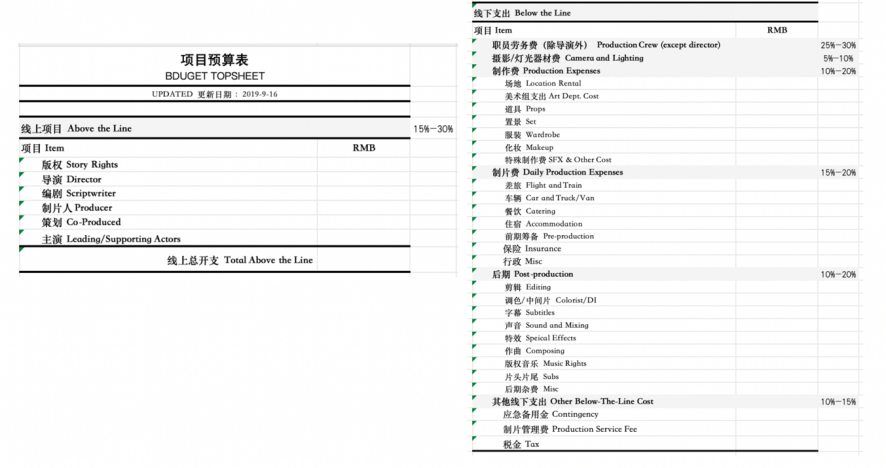
Single-Project Master Budget Sheet
Audience Composition: Identify Your "One Thousand Die-Hard Fans"
"The world begins with your one thousand die-hard fans."
The seventh chart Jessica Chen presented was the Basic Demographic Composition Chart of Chinese Film Audiences. She emphasized, "A film is a content product. You must first be clear: who are you making this for? What is their gender, age group, and city tier?" This directly determines the film's target audience, the scale of its potential viewership, and its box office range.
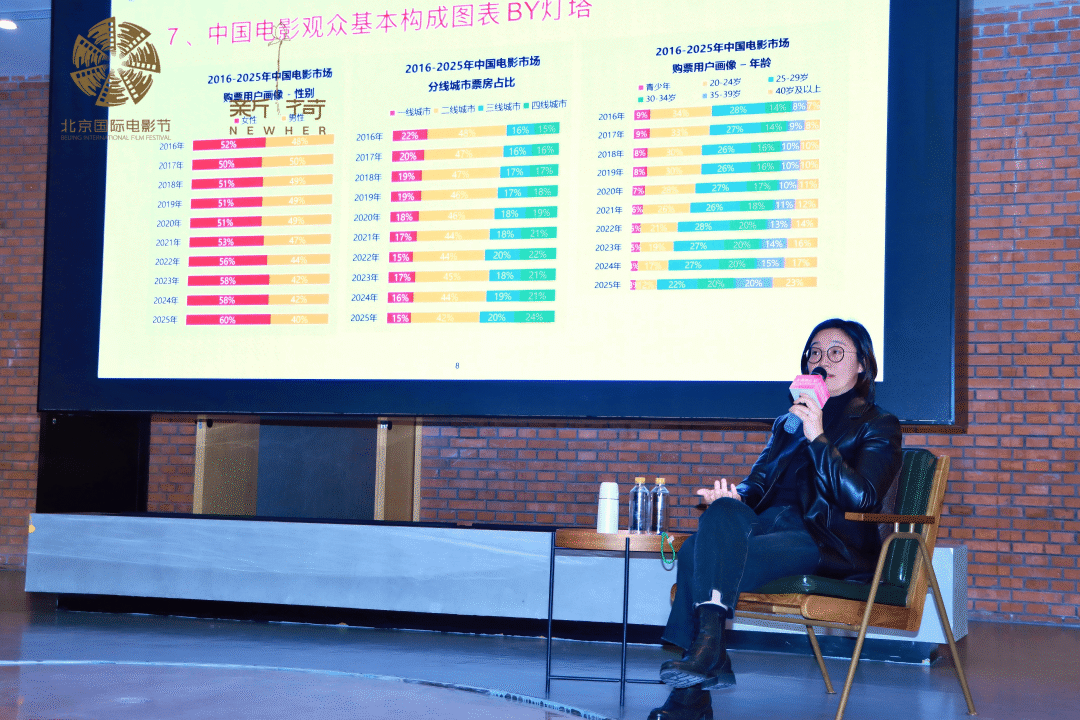
Jessica Chen explains the Basic Demographic Composition Chart of Chinese Film Audiences
She emphasized, "Filmmaking is a process of extending from oneself to others. If you don't know what to shoot, just think about what you most want to see." Using herself as an example, she said, "As a working mother, the struggles and sweetness of my life were rarely seen in films, which is why Lost, Found came to be."
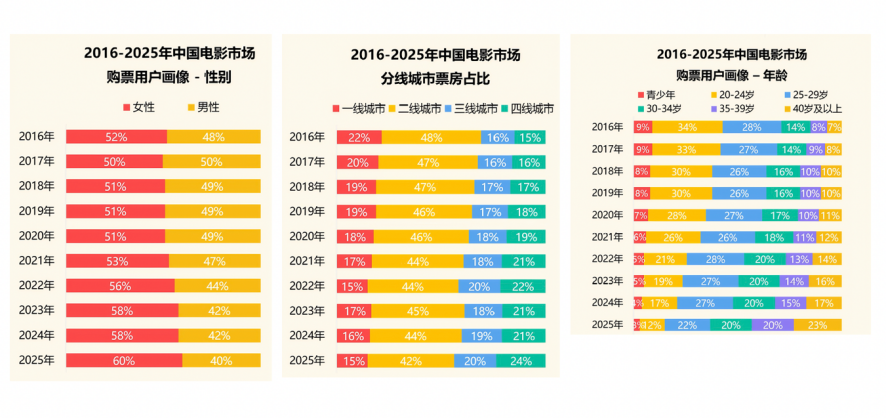
Basic Demographic Composition Chart of Chinese Film Audiences
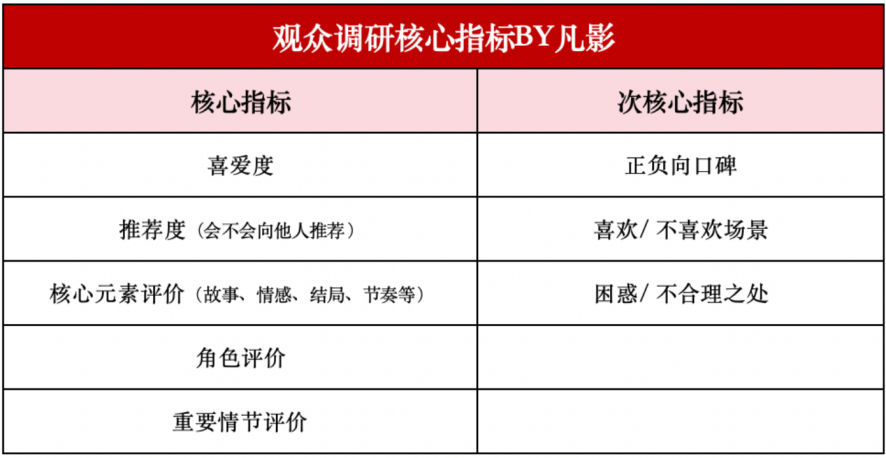
Core Indicators of Audience Research
Secondary Rescue: Using Editing to Amplify Emotional Resonance
"Editing helps audiences achieve powerful emotional experiences."
The essence of film consumption is emotional consumption. The willingness to buy a ticket stems from the audience's pursuit of intense emotional stimulation, deep satisfaction, and powerful resonance. Opinions and theories are merely sediment after emotional consumption; what audiences truly seek is an emotional payoff. Editing is precisely the key to amplifying this emotional resonance. If the main creators find themselves lost during the editing phase, introducing audience perspective research becomes essential. Once it's discovered that the emotional expression isn't full enough, editing can fulfill its "second rescue" function, helping the film achieve emotional enhancement.

Jessica Chen and Young Creators
Q&A

A Young Creator Asking Questions
Young Creator: When it comes to chasing box office success by catering to the masses versus sticking to your own artistic vision, how do you make that choice?
Jessica Chen: First off, you've gotta be true to yourself. Pretending to be someone else won't last long-term. There's no right or wrong between going mainstream or staying niche - it's just a choice. If you're aiming for the big crowds, you need to get what they want; if you're after that auteur vibe, that's totally doable too. The key is being crystal clear about what you choose.

Jessica Chen Answering the Questions
Young Creator: How can female-centric films keep innovating?
Jessica Chen: I think we've still got a long road ahead for women's cinema. The core issues women care about are pretty focused - the real challenge isn't so much "what to shoot" but "how to shoot it". We need more creators who've nailed the rules of genre storytelling, using solid techniques and narrative styles to really dig into women's experiences in a way that's thorough, powerful, and makes audiences want to watch.
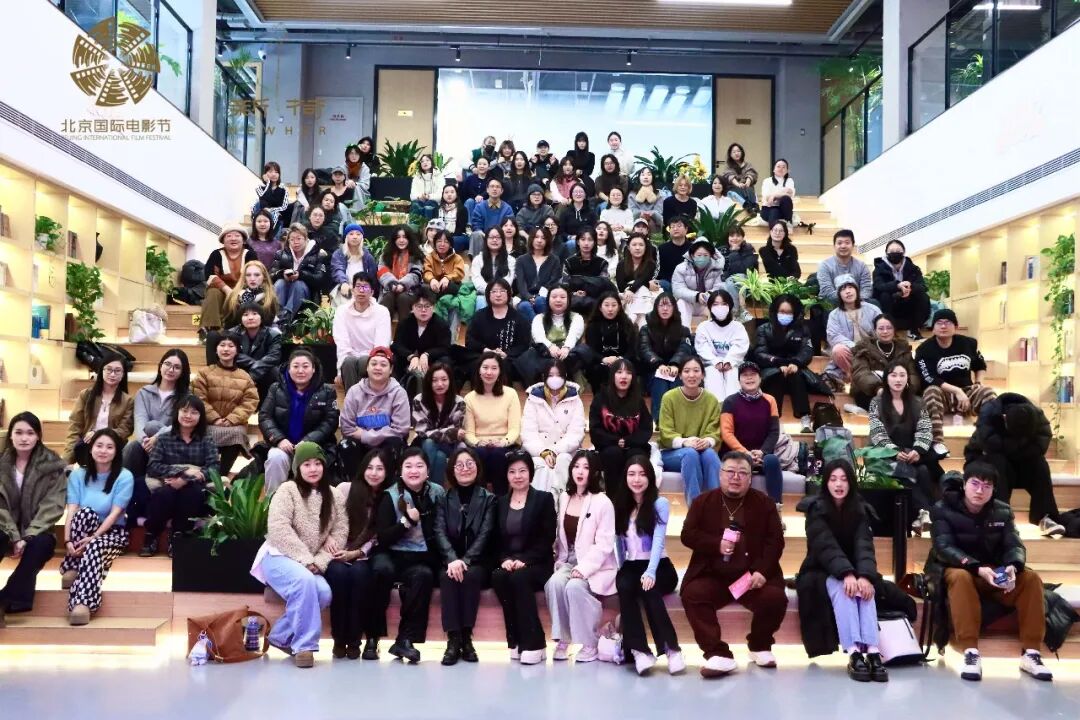
Jessica Chen Taking A Group Photo with Young Creators
Filmmaking is a practice that demands precise collaboration. Every alignment between producer and director paves the way for the work to take shape. Jessica Chen's eight charts serve not only as a distillation of experience but also as practical tools to help young filmmakers break free from uncertainty and find balance between creativity and the market.